The Shape
of Becoming

Huiyuan Zhang's First UK Online Solo Exhibition
An exploration of clay, fire, ash, air, and time

Date · 10/05/2025-10/09/2025
Presented by EveryArt · London, United Kingdom

Scroll

The Shape of Becoming is ceramic artist Huiyuan Zhang's first online solo exhibition in the United Kingdom. It also marks an important milestone in his artistic development since relocating to London in 2023.

More than a presentation of artworks, the exhibition offers a broader reflection on the evolution of Zhang's practice. It traces a journey from personal experience to natural processes, from vessel-based aesthetics to spiritual inquiry, and from the context of contemporary Chinese ceramics to a new position within the British art landscape.

Working with clay as his primary medium, Zhang embraces fire, ash, air, and time as active participants in the creative process. Rather than pursuing complete control over the final outcome, he allows natural forces to shape the work alongside his own intentions. For Zhang, ceramics are not static objects. They are condensations of lived experience, material records of transformation, and systems that continue to evolve long after they leave the kiln.

The Shape of Becoming is an exploration of this state of continuous emergence. Form is not an endpoint. Becoming is where the life of the work truly begins.

Between Clay, Fire, and Time

Contemporary ceramic practice is undergoing a significant transformation. No longer understood solely as craft, utility, or decoration, ceramics have increasingly become a critical medium through which artists engage with questions of embodiment, temporality, ecology, spirituality, and cultural identity.

Huiyuan Zhang's work exists within this shift.

Beginning with the language of functional vessels, his practice continually moves beyond the object itself. Bowls, cups, teapots, plates, containers, and sculptural forms retain their material presence while gradually transcending their utilitarian origins. They become spaces through which questions of consciousness, memory, and human experience can be explored.

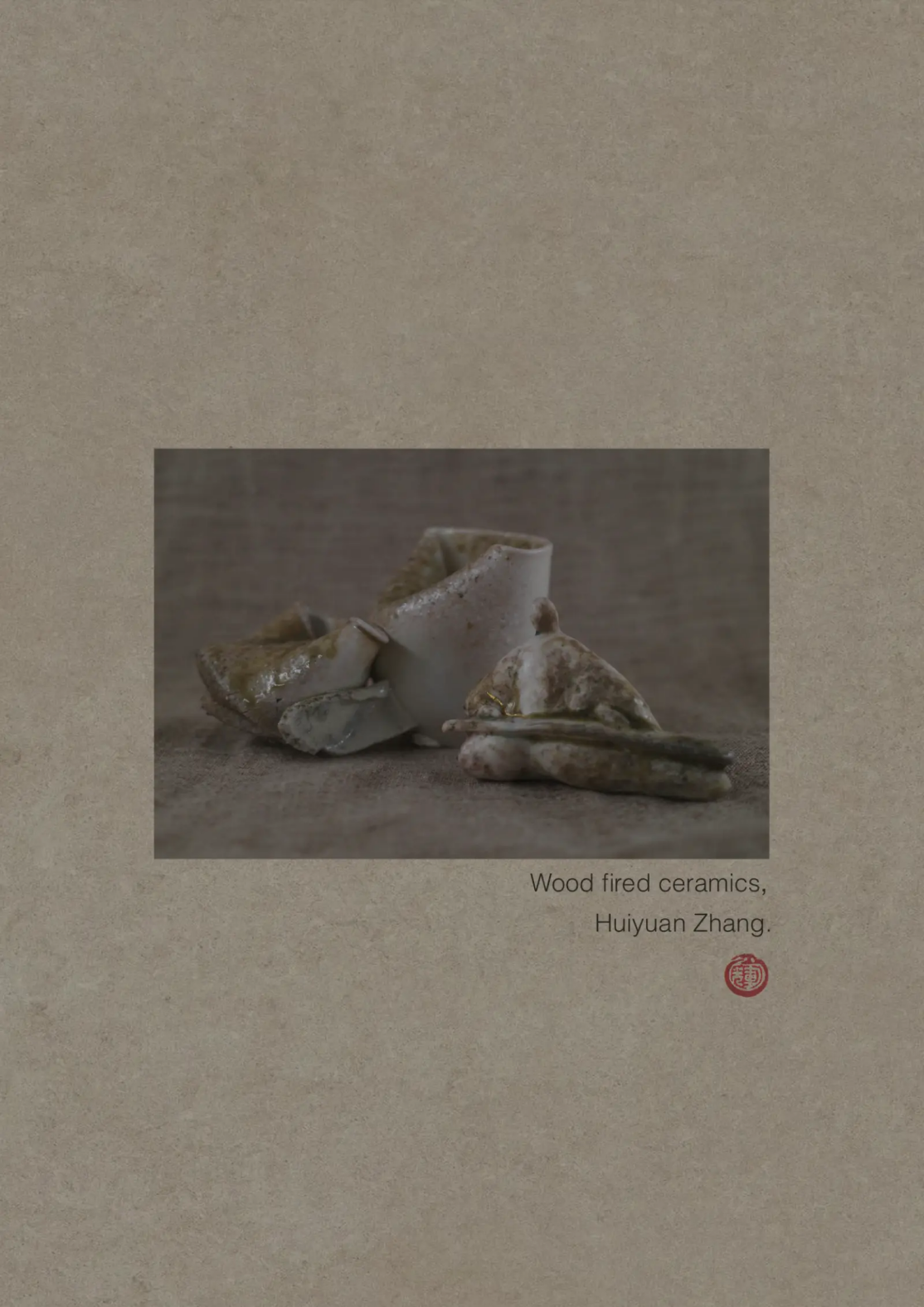
In Zhang's work, clay is never a passive material. Fire is not merely a technical process, and ash is far more than a surface effect. Together, they become active agents in the formation of the work. Unpredictable elements such as flame paths, ash deposits, air circulation within the kiln, temperature fluctuations, and the movement of glaze during cooling are welcomed rather than controlled. These forces leave traces that can never be repeated.

As a result, each piece emerges not as a predetermined object but as a collaborative outcome shaped by natural forces, artistic intention, and the passage of time.

As noted in the essay Between Fire and the Phantom Voice: Generation and Critique in Huiyuan Zhang's Ceramic Practice, the development of Zhang's work between 2022 and 2024 reveals a clear trajectory. His focus gradually shifts from reflections on individual experience toward a deeper engagement with natural order, spirituality, and questions of existence.

The Shape of Becoming unfolds from this evolving body of work.

Rather than presenting a single series, the exhibition brings together several stages of Zhang's artistic development. It follows his movement from early explorations of vulnerability, hope, and imbalance toward a growing interest in material agency, natural transformation, and spiritual structures. It also considers how his relocation to the United Kingdom has prompted a reconsideration of his practice within a new cultural context.

When ceramics are no longer understood merely as objects, how can they become a language through which life, time, and existence are experienced and understood?

What Does The Shape of Becoming Mean?

"Becoming" is the key to understanding Huiyuan Zhang's practice.

In Zhang's work, an artwork does not begin with a fixed concept that is then faithfully executed. Instead, it emerges gradually through a process of continual transformation. The shaping of clay is only the beginning. What ultimately determines the character of a piece is the ongoing interaction between flame, ash, temperature, air circulation, and time throughout the firing process.

For this reason, The Shape of Becoming is not concerned with a finished form. Rather, it explores how form comes into being, how it changes, and how it gradually discovers itself through forces that remain beyond complete control.

Zhang understands ceramics as a finite and self-contained system of energy. Clay originates from nature, undergoes transformation through intense heat, receives the marks of fire, and ultimately returns to a larger natural order. This idea runs throughout several bodies of work, including Unform 0, Ethereal Clouds, The Three Realms, Ember Breath, and Bodhi.

In the essay Between Flame and Murmur: The Generation and Criticism of Huiyuan Zhang's Ceramic Art, published by Artron Art in May 2024, it is noted that Zhang's ongoing interest in cycles, return, and interconnectedness places his work in dialogue with the holistic worldview often found within Eastern philosophical traditions.

Yet The Shape of Becoming does not seek merely to celebrate harmony, balance, or the beauty of nature.

If the work is viewed only through the lens of natural transformation, it risks being understood as a quiet, poetic, and comforting form of ceramic aesthetics. For Zhang today, however, more pressing questions have emerged. How can an artist develop an individual voice while embracing the unpredictability of natural processes? How can a work maintain a clear spiritual and conceptual direction while remaining open to chance? And how might ceramics engage with experiences of uncertainty, anxiety, and instability rather than simply offering images of balance and return?

These questions form the critical foundation of the exhibition.

Rather than presenting Zhang's work as a perfected vision of Eastern aesthetics, The Shape of Becoming focuses on the reality of artistic development. It brings attention to an artist who is still in the process of becoming. The exhibition reveals strengths and uncertainties, moments of transition, unfinished possibilities, and the challenges that continue to shape the work.

Becoming is not a conclusion that has already been reached.
It is a question that remains open.

A Significant Moment in Huiyuan Zhang's Journey in the United Kingdom

The Shape of Becoming arrives at a particularly significant moment in Huiyuan Zhang's artistic development.

Since relocating to London in 2023, Zhang's practice has entered a new phase. This move represents more than a change of geography. It marks his entry into a different artistic ecosystem and a broader international context for contemporary ceramics.

The United Kingdom has long played a pivotal role in the history of ceramic art. From the legacy of studio pottery to contemporary installation practices, from material experimentation to conceptual inquiry, ceramics in Britain have evolved far beyond the boundaries of craft and utility. Today, they occupy an important position within contemporary art discourse.

For Zhang, this environment offers both opportunity and challenge.

The question is no longer simply how to continue making ceramics. Instead, it is how to position his practice within a contemporary British context while remaining true to the experiences and traditions that have shaped his work. His ongoing exploration of Eastern philosophy, vessel traditions, wood-firing processes, and material transformation must now engage with a wider artistic conversation that extends beyond cultural labels and established categories.

The Development of Huiyuan Zhang's Ceramic Practice

From Unform 0 to The Shape of Becoming — Huiyuan Zhang's artistic practice did not emerge fully formed. Rather, it has developed through a series of distinct stages, each shaped by different exhibitions, bodies of work, and shifts in artistic thinking.

Phase One An Unstable Beginning
Unform 0 and the Condition of Individual Existence

In 2022, Huiyuan Zhang presented Unform 0 in the exhibition A Dream of Tomorrow in Shanghai.

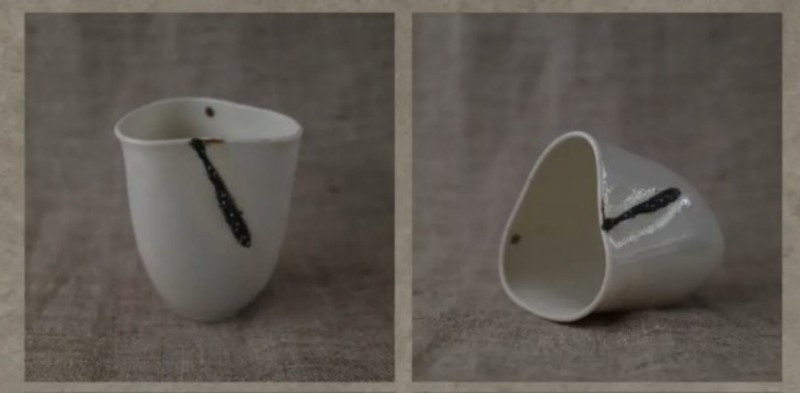
During this period, his work was primarily concerned with questions of vulnerability, imbalance, and hope within the human condition. Unform 0 embodies this interest through a form that resists stability. The vessel departs from the symmetry and balance traditionally associated with ceramic objects. Its rim is irregular, its walls subtly tilted, and its centre of gravity appears slightly displaced.

The work never fully collapses, yet it carries a persistent sense of uncertainty, as though it exists in a state between balance and disruption.

For this reason, Unform 0 can be understood as an unstable beginning. It does not present a resolved statement or a fully developed artistic language. Instead, it marks the starting point of a longer journey. Within this early work, one can already recognise themes that would continue to unfold throughout Zhang's later practice: an interest in transformation, an acceptance of uncertainty, and a fascination with forms that remain in the process of becoming.

Phase Two From Making to Becoming
Ethereal Cloud and a Turn Towards Material Agency

In 2023, Huiyuan Zhang's Ethereal Cloud series was presented as part of PARADISE·Art Festival 2.0, curated by EveryArt in Shanghai.

This body of work marks a significant shift in his artistic development. While earlier works were primarily rooted in personal experience and emotional reflection, Ethereal Cloud signals a growing interest in the transformative capacities of the material itself.

During this period, Zhang began to move away from treating clay as a medium through which ideas were simply expressed. Instead, he became increasingly attentive to the ways in which materials could participate in the formation of meaning. Fire, ash, air circulation, and time were no longer viewed as external conditions of production, but as active forces within the work.

The image of the cloud became particularly important in this series. Rather than representing a cloud through illustration or symbolism, Zhang allowed cloud-like forms, textures, and atmospheres to emerge through the firing process itself. Surface variations, ash deposits, and subtle shifts in colour developed through the interaction between clay and kiln, creating forms that seemed to arise organically rather than being imposed from above.

In this sense, Ethereal Cloud represents a transition from making to becoming. The work is no longer defined solely by the artist's intention. Instead, it emerges through an ongoing dialogue between material, process, and chance.

This period marks the beginning of Zhang's deeper engagement with material agency, a concern that would continue to shape much of his subsequent practice.

Phase Three Beyond the Vessel
The Three Realms, Ember Breath, and Bodhi as a Spiritual Turn

In 2024, Huiyuan Zhang participated in The Phantom's Voice in the Vortex, a group exhibition curated by the renowned curator Chen Bofan and jointly organised by Fangyin Art, Shanghai Bailian Asset Holdings Co., Ltd., and BAI Space (Yongxing Warehouse). The exhibition took place at BAI Space in Shanghai's historic Yongxing Warehouse.

For this exhibition, Zhang presented works including The Three Realms, Ember Breath, and Bodhi. Together, these works mark a significant shift in his practice towards questions of consciousness, spirituality, and the human condition.

If Unform 0 explored vulnerability and uncertainty within individual experience, and Ethereal Cloud focused on processes of natural transformation, then The Three Realms, Ember Breath, and Bodhi engage with more complex concerns: impermanence, memory, resilience, awareness, inner order, and the search for meaning within an increasingly unstable world.

At this stage, the vessel begins to move beyond its conventional identity as an object of use. It becomes a space for reflection, contemplation, and existential inquiry.

The Three Realms draws inspiration from the spiritual and symbolic associations of the Kapala, a ritual object found within Tibetan Buddhist traditions. Rather than reproducing a religious artefact, the work reflects upon impermanence and the transient nature of human existence. It asks how the self might be understood beyond fixed identities, stable forms, and inherited structures.

In Ember Breath, Zhang turns his attention toward what remains after transformation. The work is not concerned with the intensity of fire itself, but with the lingering warmth that survives after the flames have passed. Through traces of burning, ash, and erosion, it evokes a quiet resilience that persists in the aftermath of change.

Bodhi introduces a more inward and contemplative dimension. Rather than referring directly to religious doctrine, the work explores states of awareness, attentiveness, and inner balance. Its form suggests a process of gathering, centring, and returning, embodying a search for clarity within complexity.

What distinguishes this phase from Zhang's earlier work is a growing interest in the relationship between material transformation and spiritual experience. The vessel no longer functions primarily as a container. Instead, it becomes a site through which questions of mortality, consciousness, memory, and human existence can be explored. This marks a crucial turning point in Zhang's artistic development. The focus shifts from how a work is made to what a work can reveal about the deeper conditions of being.

Phase Four After Arriving in Britain
From Chinese Experience to a British Context

Since settling in London in 2023, Huiyuan Zhang's practice has entered a new phase of development.

This shift does not represent a departure from his earlier work. Rather, it involves a reconsideration of the material knowledge, wood-firing experience, and philosophical concerns that have shaped his practice, now viewed through the context of contemporary British ceramics and contemporary art.

The British ceramic tradition has long been concerned with the relationship between material, making, vessels, and everyday life. At the same time, contemporary ceramic practice in Britain increasingly engages with broader questions of identity, memory, ecology, space, and cultural experience. For Zhang, entering this environment presents both new possibilities and new challenges.

The questions that emerge are no longer limited to the making of ceramic objects. Instead, they concern what ceramics are capable of doing within a contemporary cultural context.

How might ceramics move beyond familiar associations with tradition, craft, or cultural identity? How might wood-firing become more than a technical process and develop into a language through which ideas, experiences, and contemporary concerns can be articulated? How might ash glaze function as more than a surface effect, becoming part of a deeper investigation into material transformation and time? And how might vessels extend beyond their historical function to occupy a more active place within contemporary artistic discourse?

These questions point towards a broader shift in Zhang's practice. Increasingly, his interest lies not only in the object itself, but also in the relationships that ceramics can create between material, space, memory, and lived experience.

Four Thematic Chapters

The online exhibition is organised into four thematic chapters, each tracing a distinct dimension of Huiyuan Zhang's artistic journey.

Chapter One

Fire and Rain

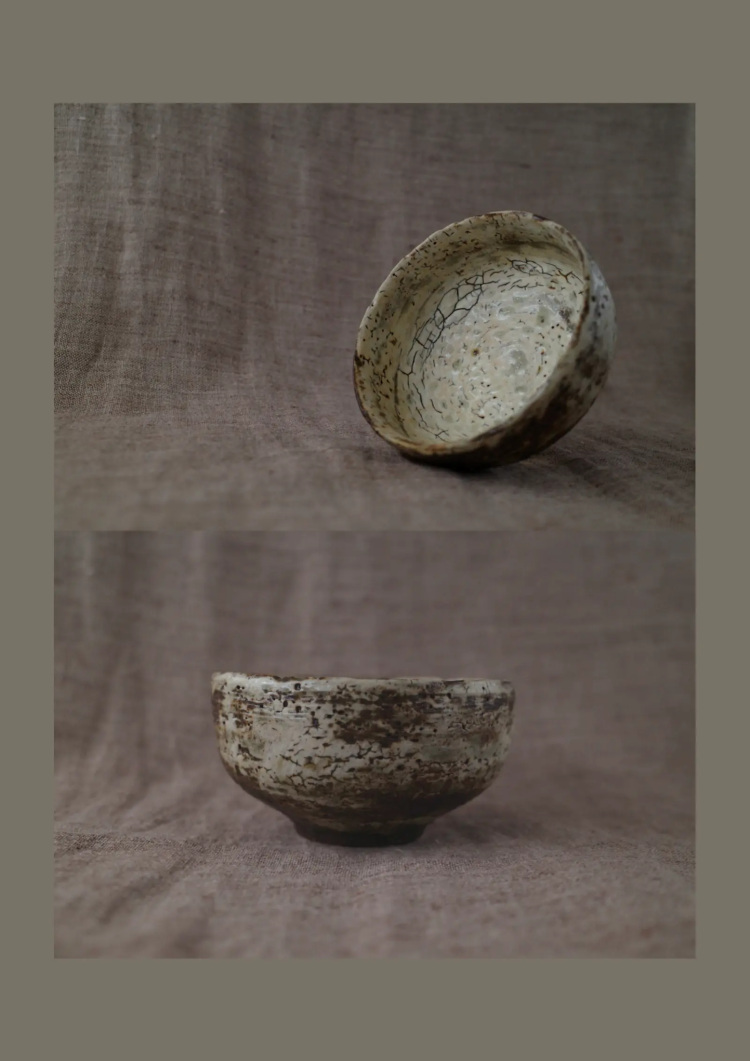
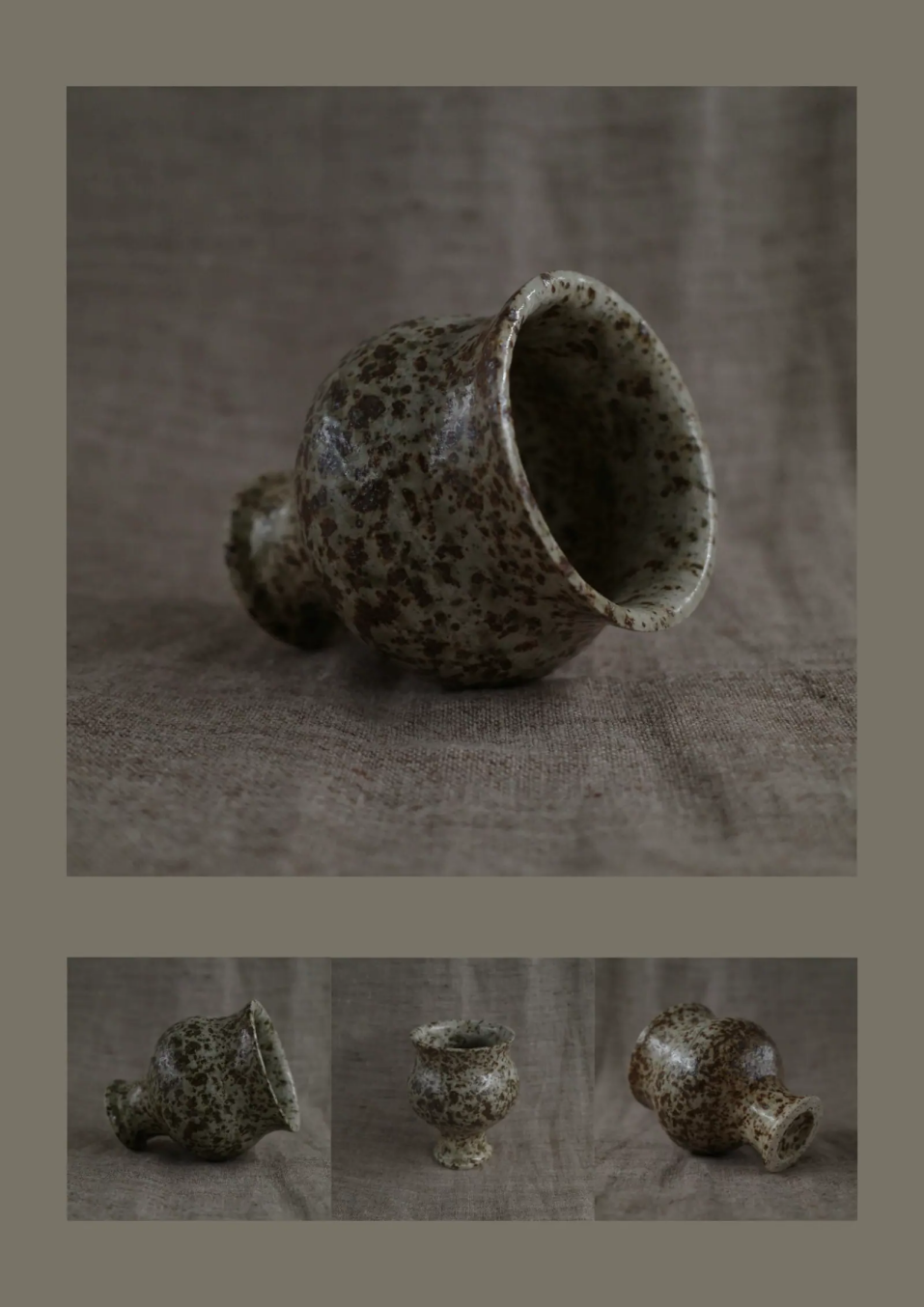
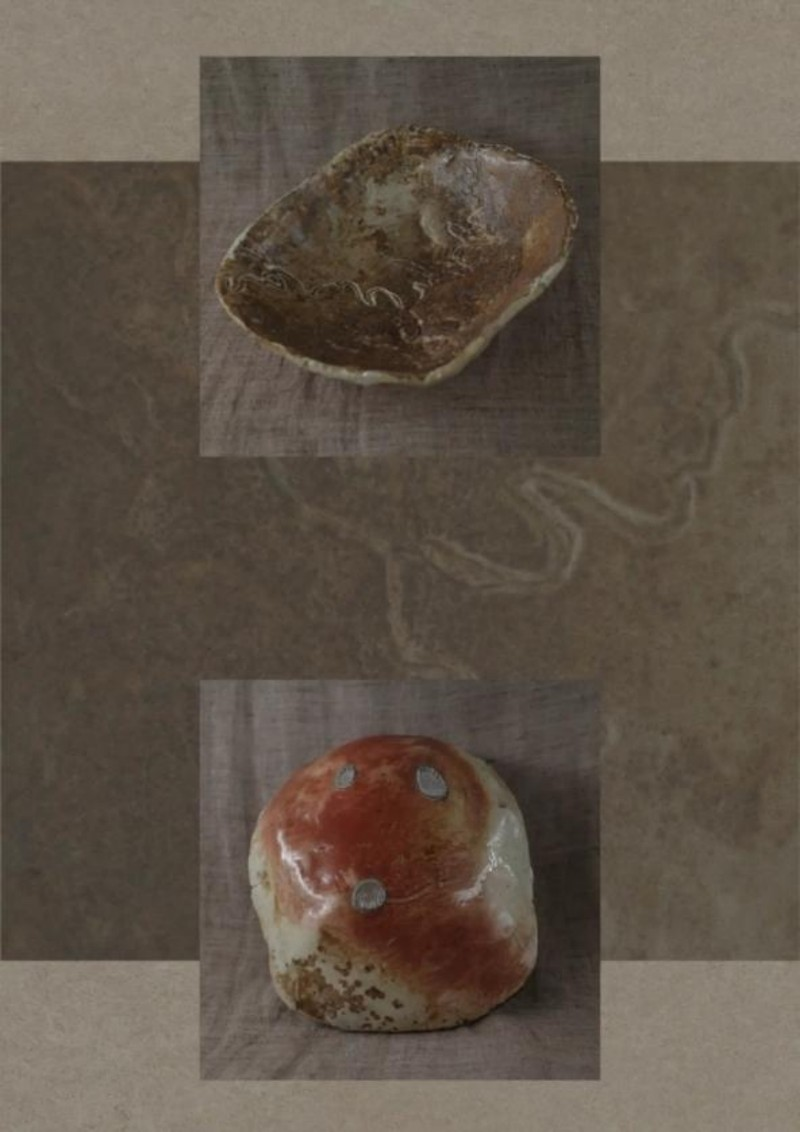
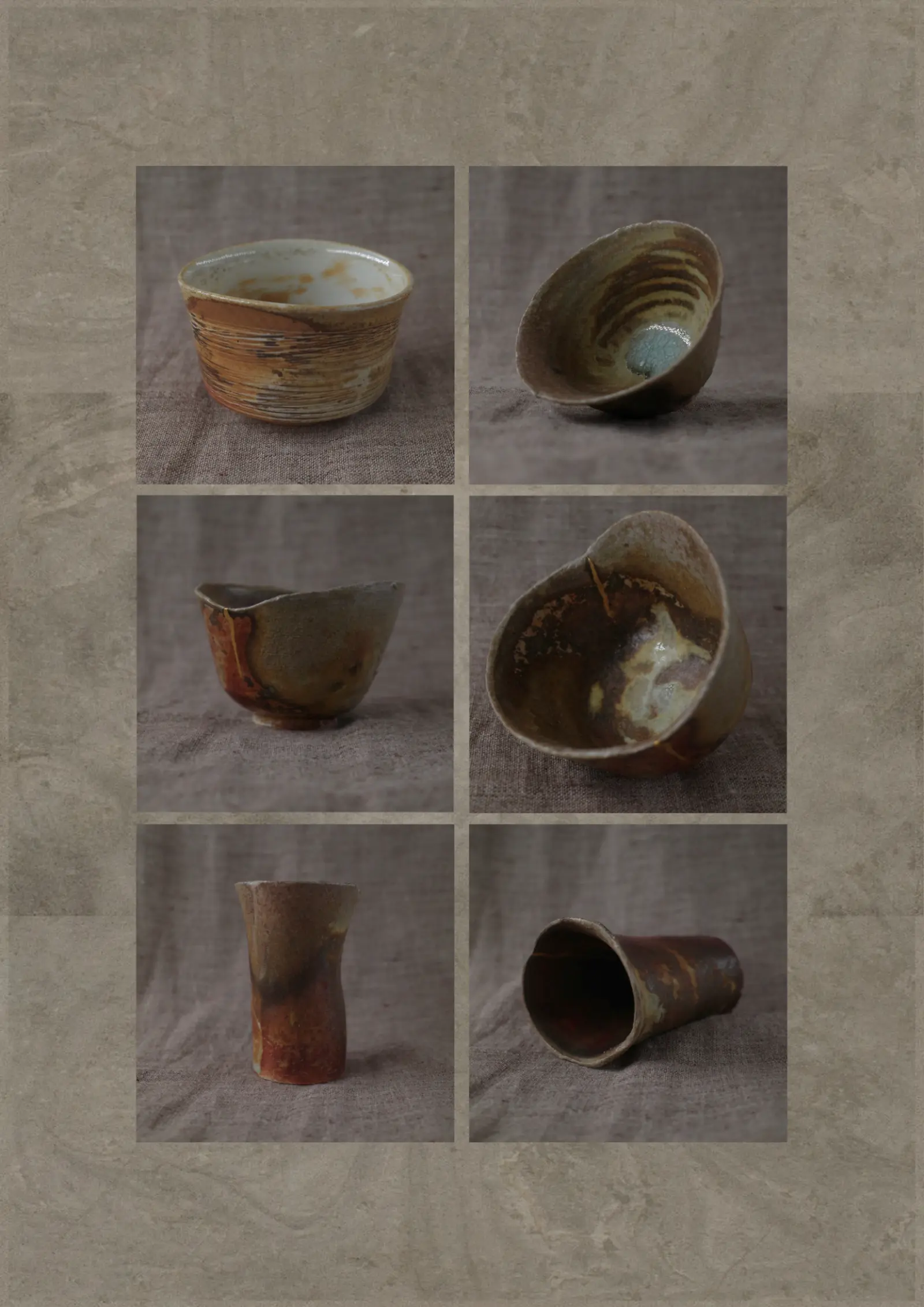
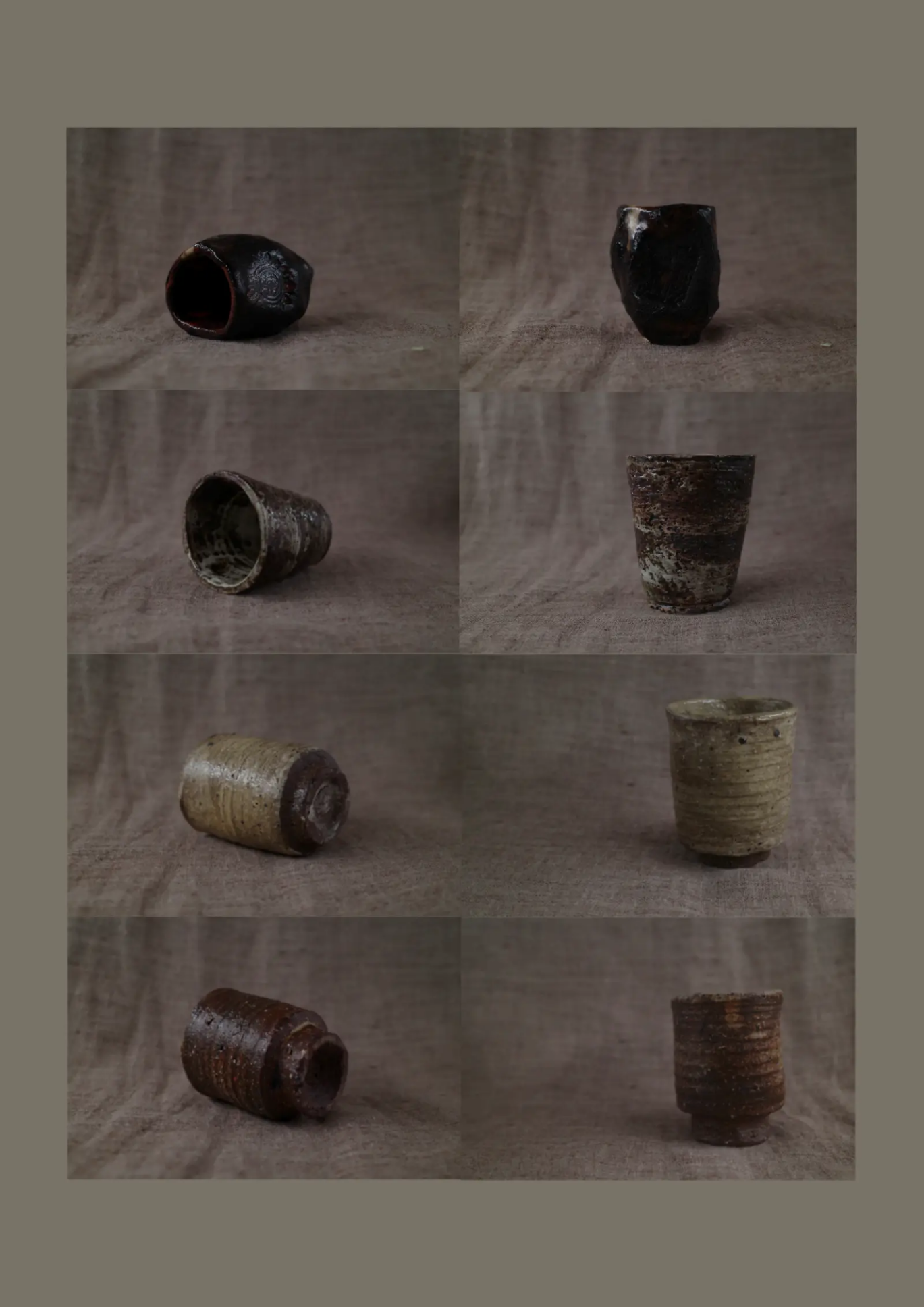
This chapter centres on works such as Dharma Rain, Bodhi Flower, and Ethereal Cloud, exploring how Huiyuan Zhang uses natural ash glazes and wood-firing processes to investigate the relationships between fire and water, destruction and renewal, combustion and nourishment.

In these works, fire is not understood as a destructive force. Instead, it becomes a generative force through which transformation takes place. Likewise, rain is more than a gentle image from nature. It functions as a metaphor for nourishment, movement, return, and renewal.

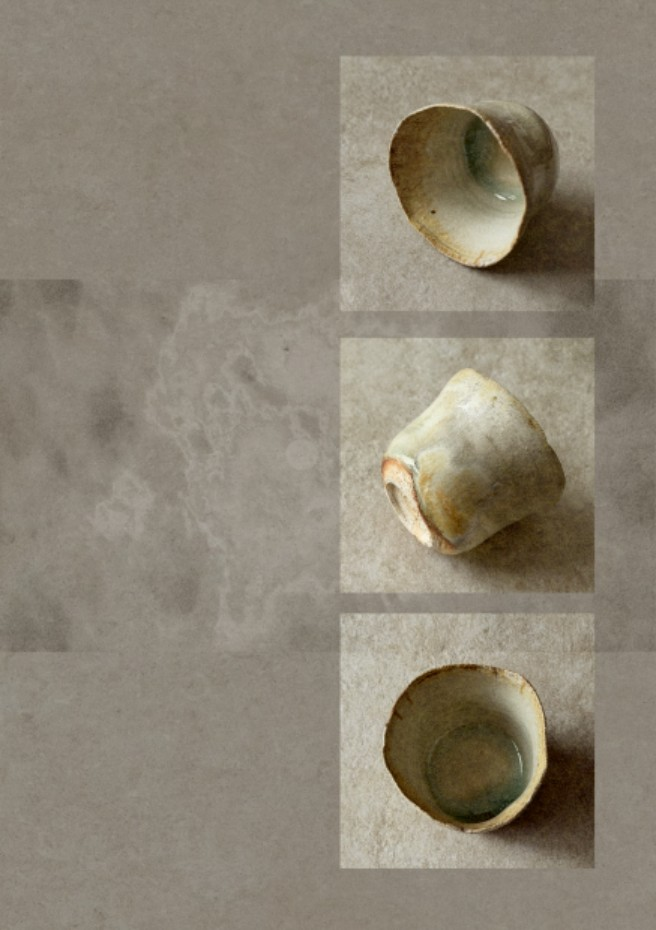
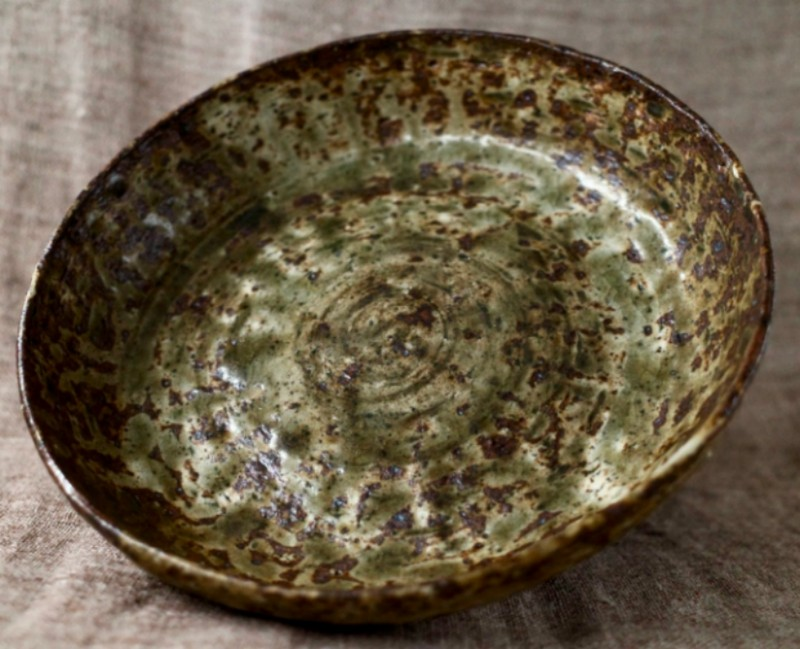
Flowing glazes, ash deposits, and mottled surfaces appear throughout the works. These traces resemble rain passing across the landscape, while also evoking the lingering marks left by fire upon clay.

Together, the works in this chapter reveal Zhang's ongoing interest in the cycles through which matter is transformed. Fire and rain become complementary forces, shaping forms that exist between erosion and growth, disappearance and emergence.
Fire and Rain 01
Ember Breath
Fire and Rain 02
Earth study series 1
Chapter Two

Vessels and Dwelling

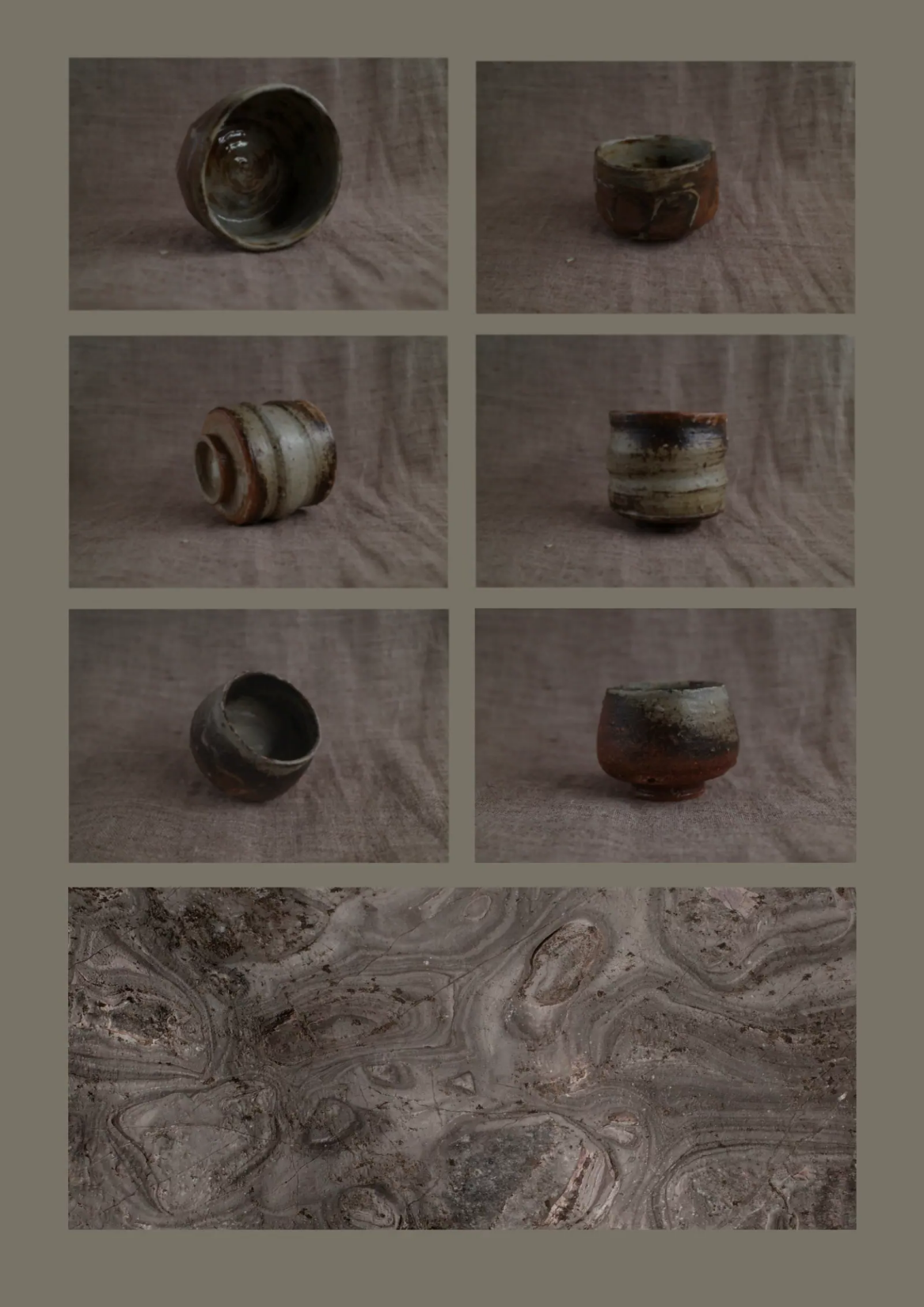
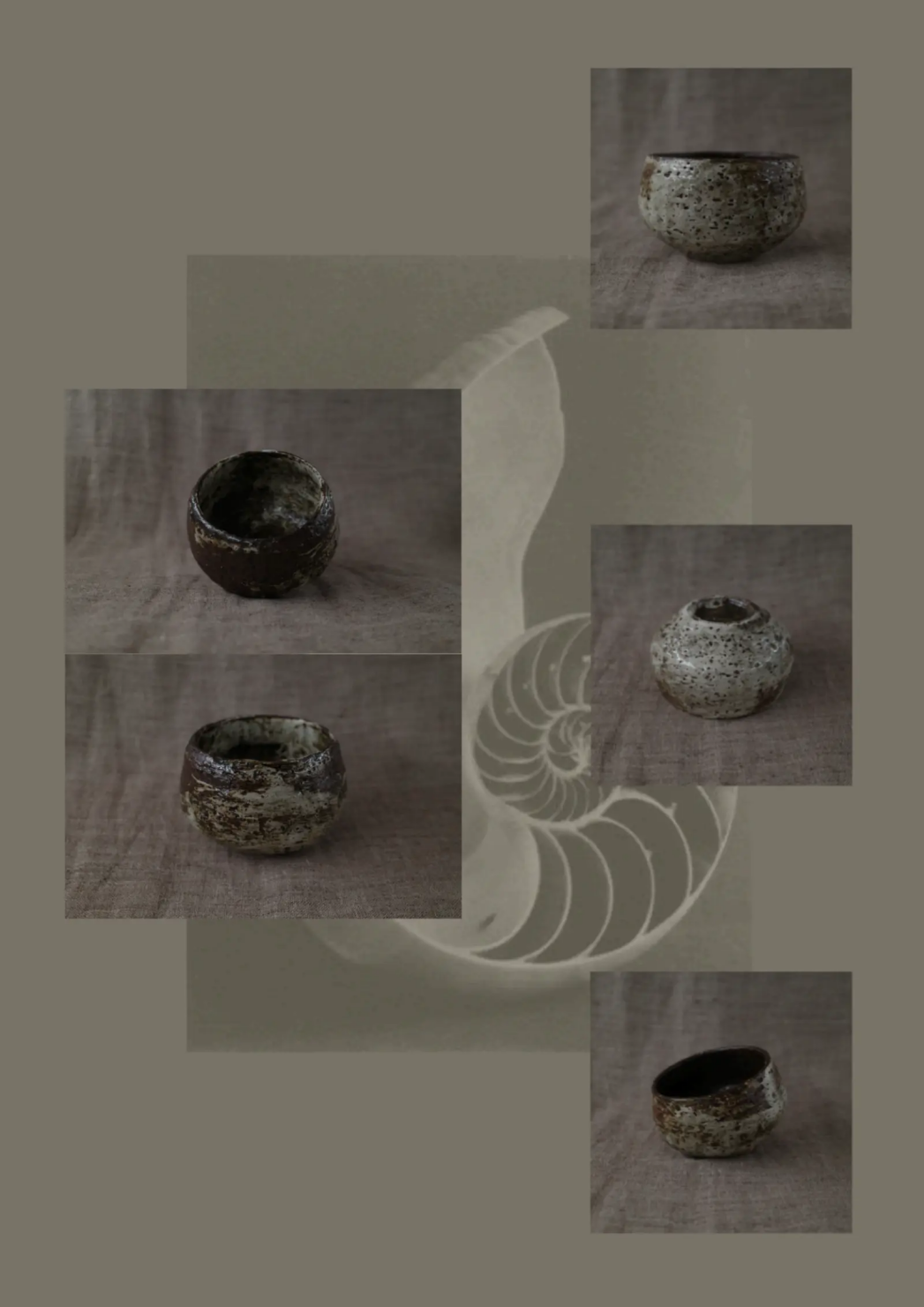
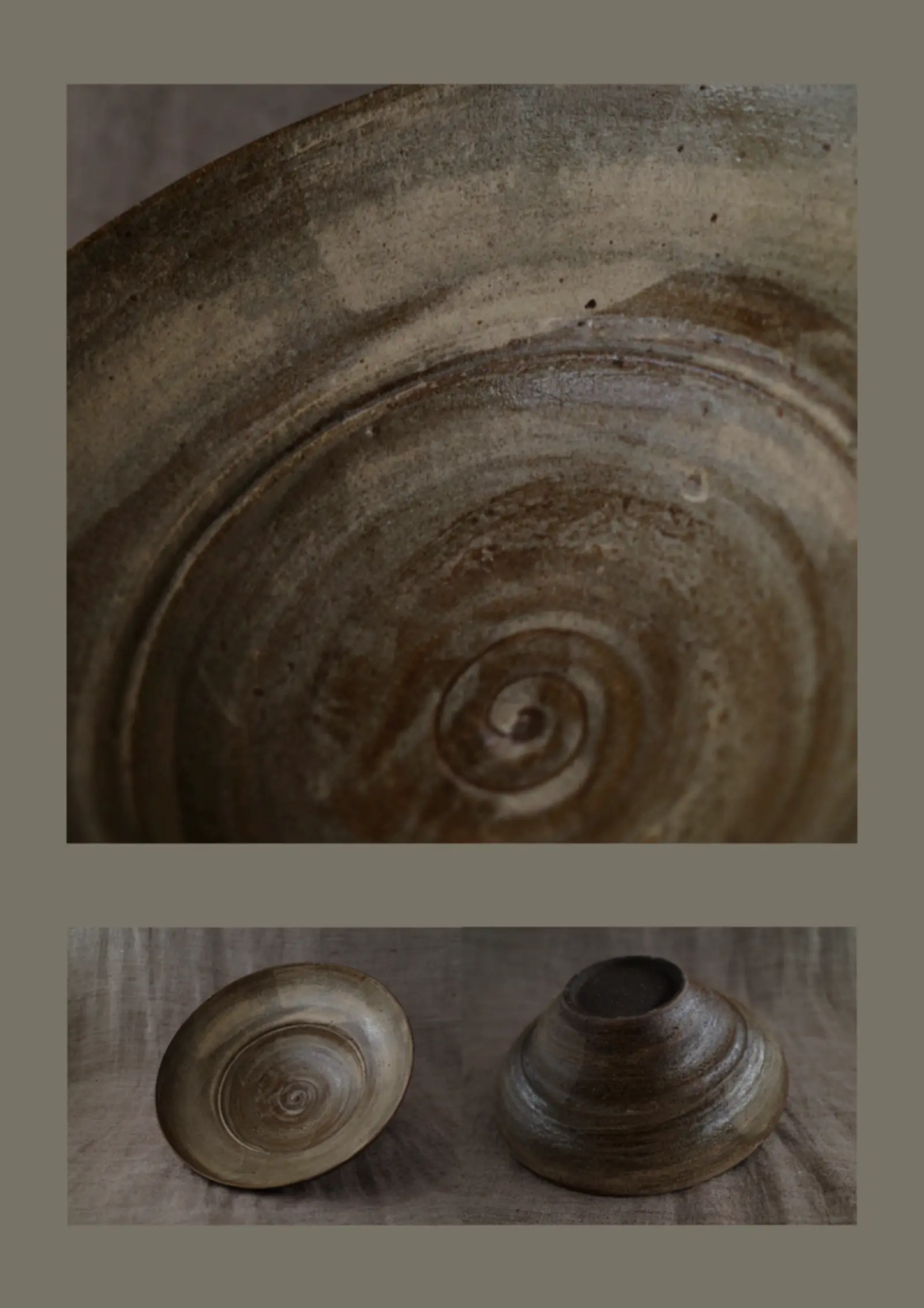
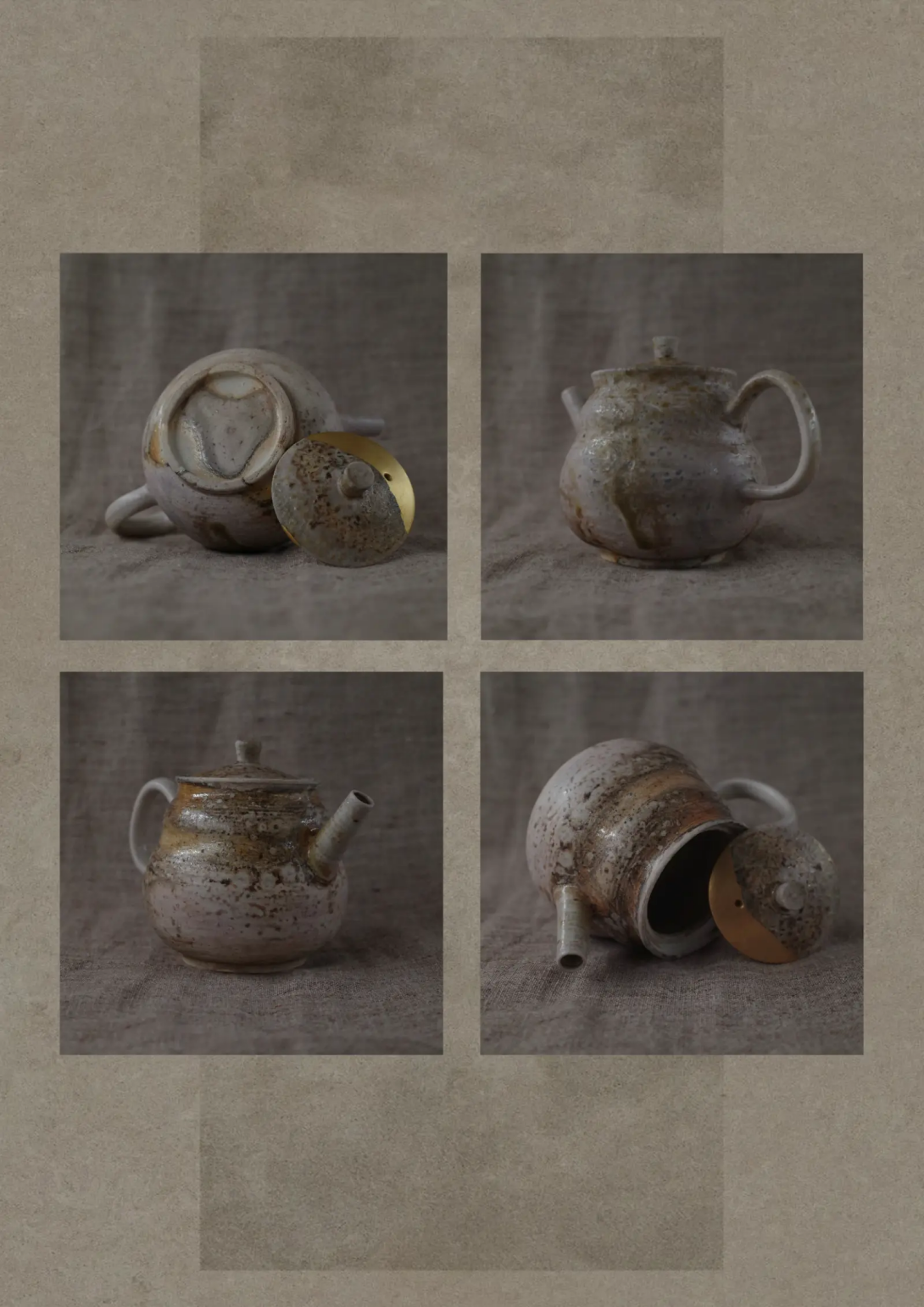
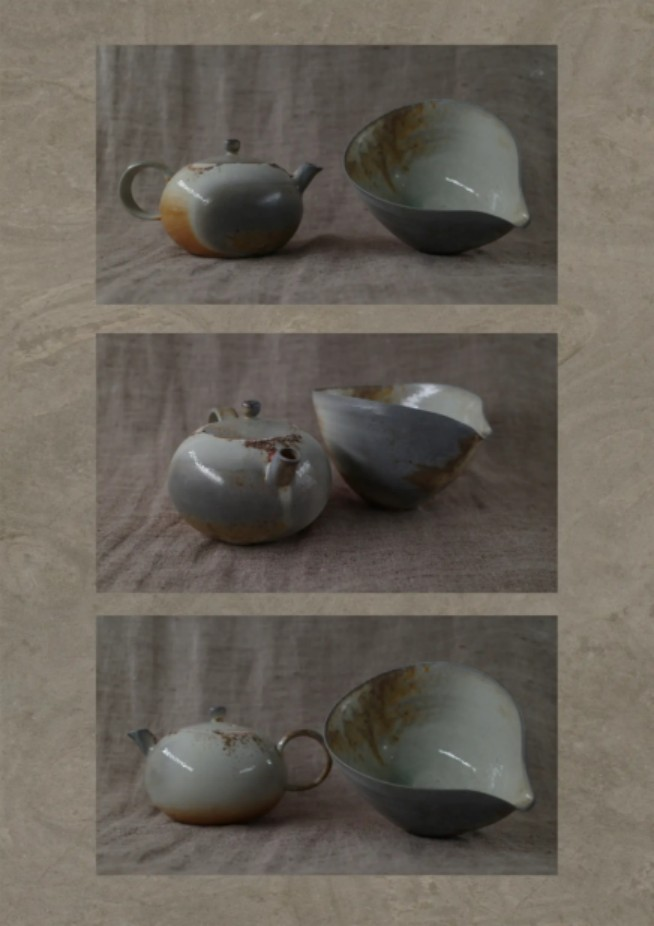
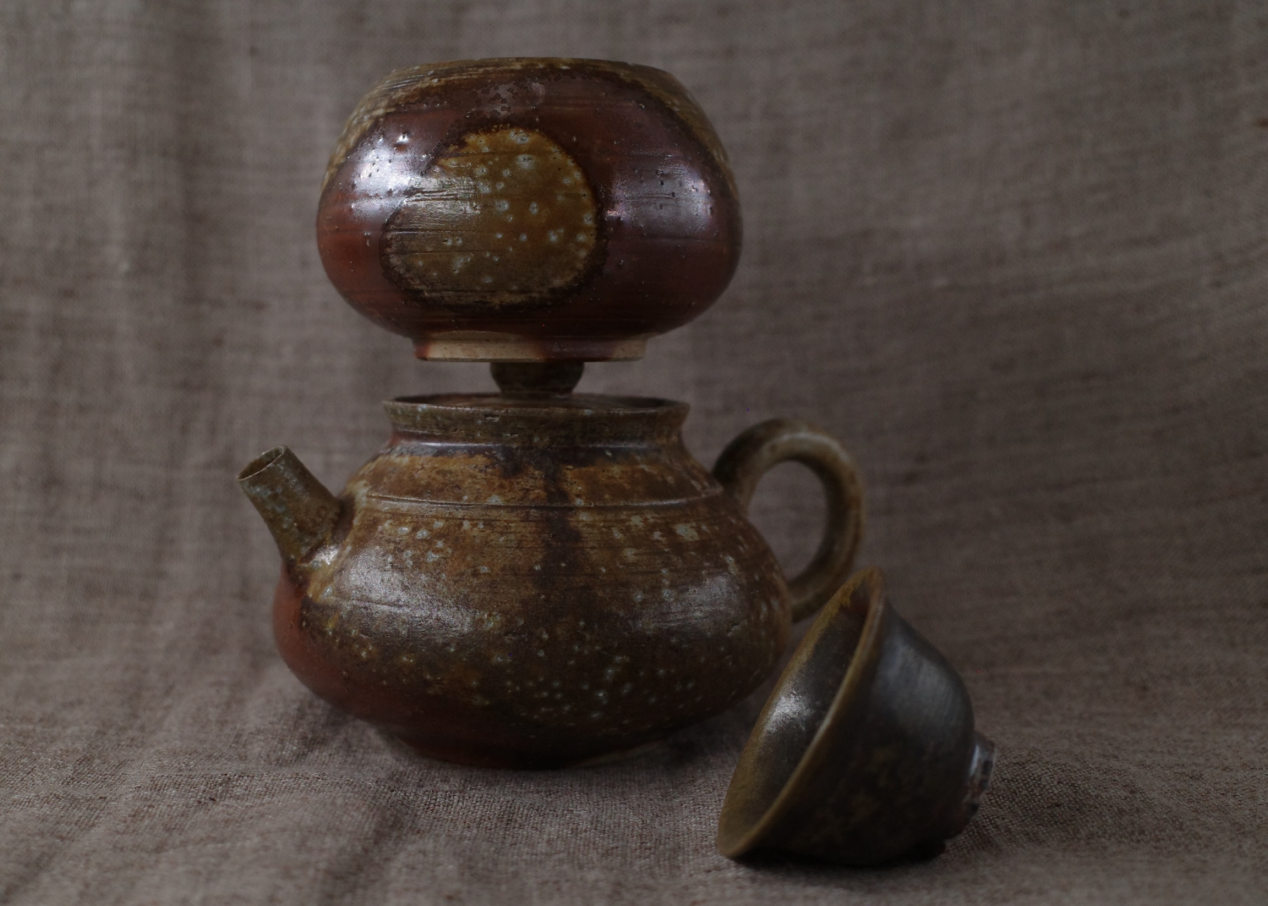
This chapter centres on the SIKA series and a selection of related teavessels. Throughout Huiyuan Zhang's practice, the vessel has remained a fundamental point of departure. Teabowls, teapots, pitchers, and small containers carry the memory of everyday use, while also embodying one of the most basic ways in which human beings relate to the world around them.

In this body of work, however, the vessel gradually moves beyond its utilitarian function. No longer defined solely by use, it becomes a space of stillness, perception, and dwelling. The object is transformed into a site where material presence, lived experience, and inner awareness can converge.

This chapter represents an important shift in Zhang's artistic development. His attention moves from the processes of natural transformation towards a deeper exploration of the vessel as a spiritual and experiential form. The vessel is no longer simply a container for physical matter. Instead, it becomes a container for perception, memory, and human experience.

Here, dwelling belongs not only to the vessel itself, but also to the viewer who encounters it.
Vessels and Dwelling 01
SIKA Series
Vessels and Dwelling 02
White Echo Bowl 1
Vessels and Dwelling 03
INK
Vessels and Dwelling 04
Earth study series 2
Vessels and Dwelling 05
Seed vessel
Vessels and Dwelling 06
White Echo Bowl 2
Chapter Three

Embers and Life

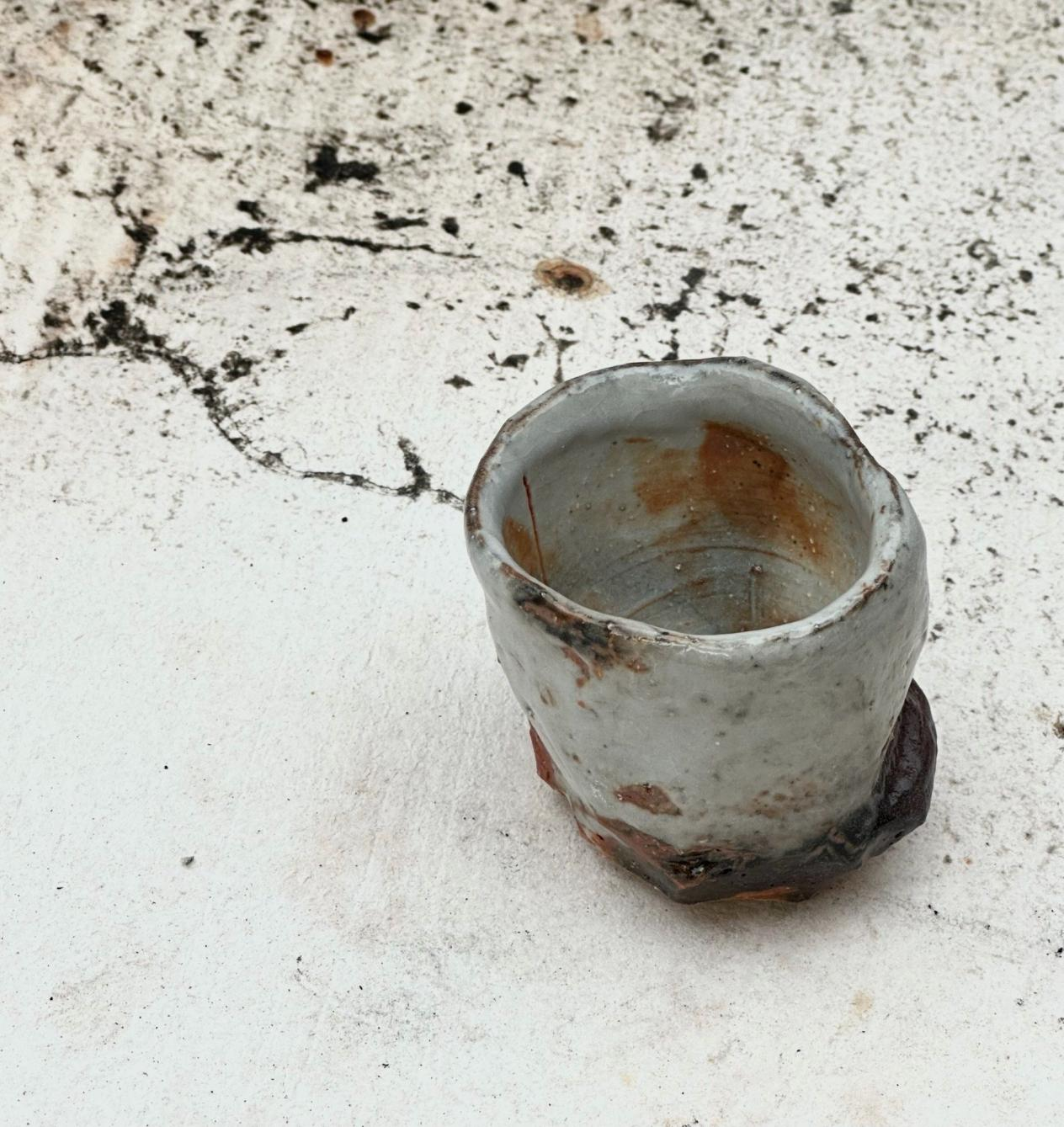
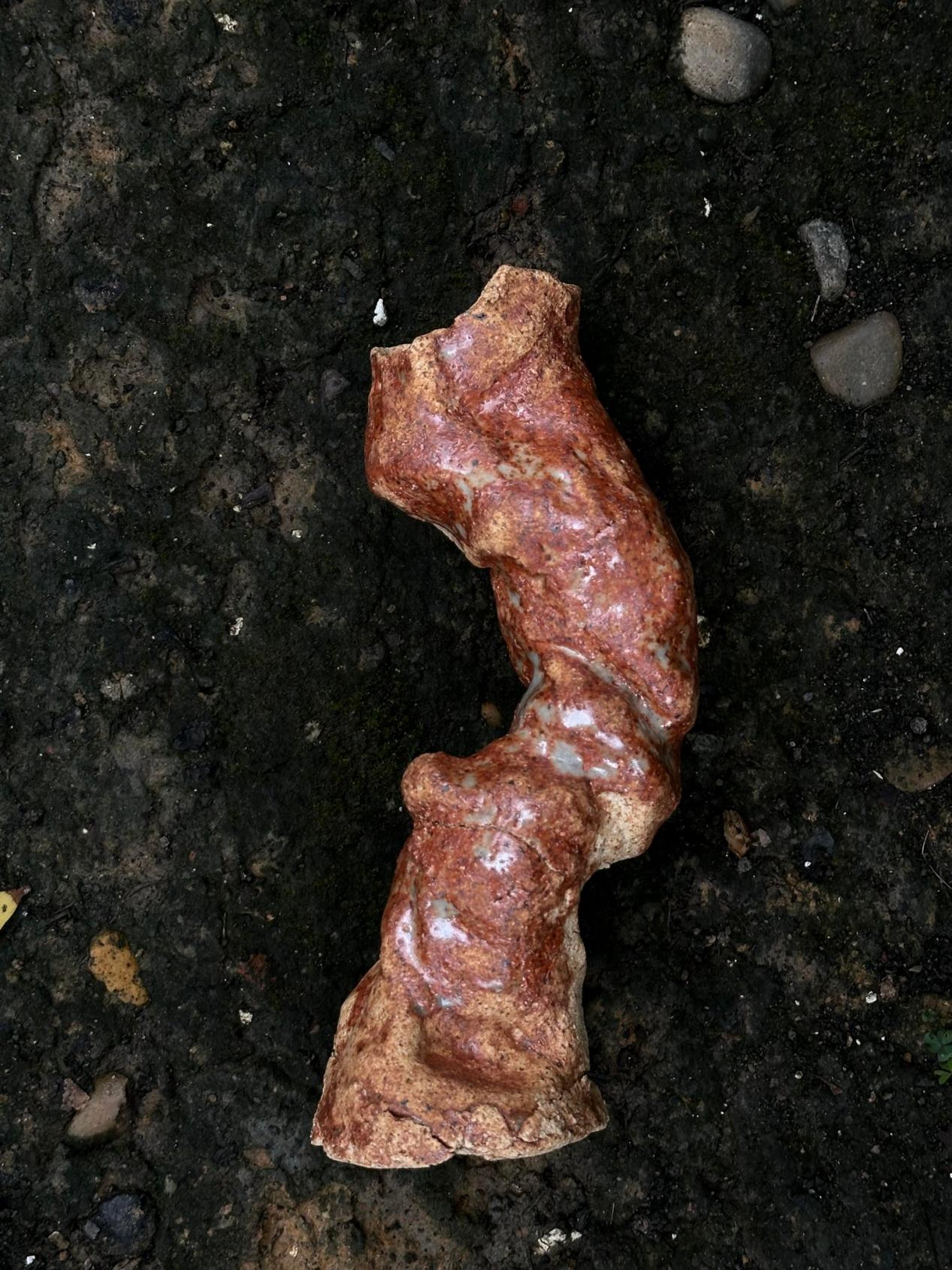
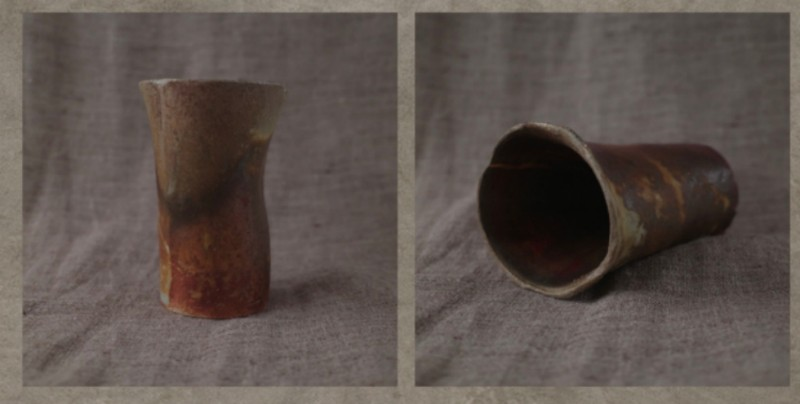
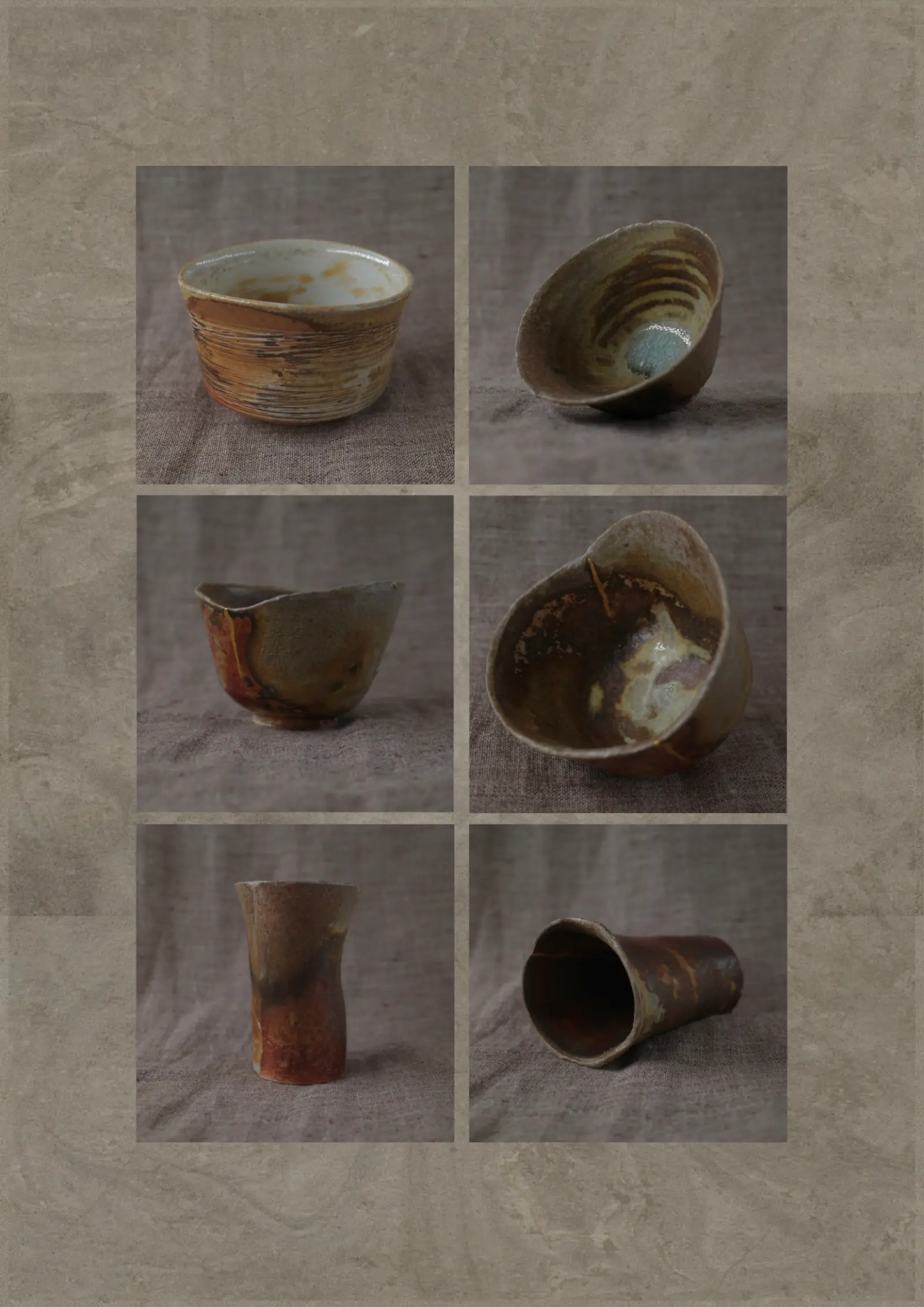
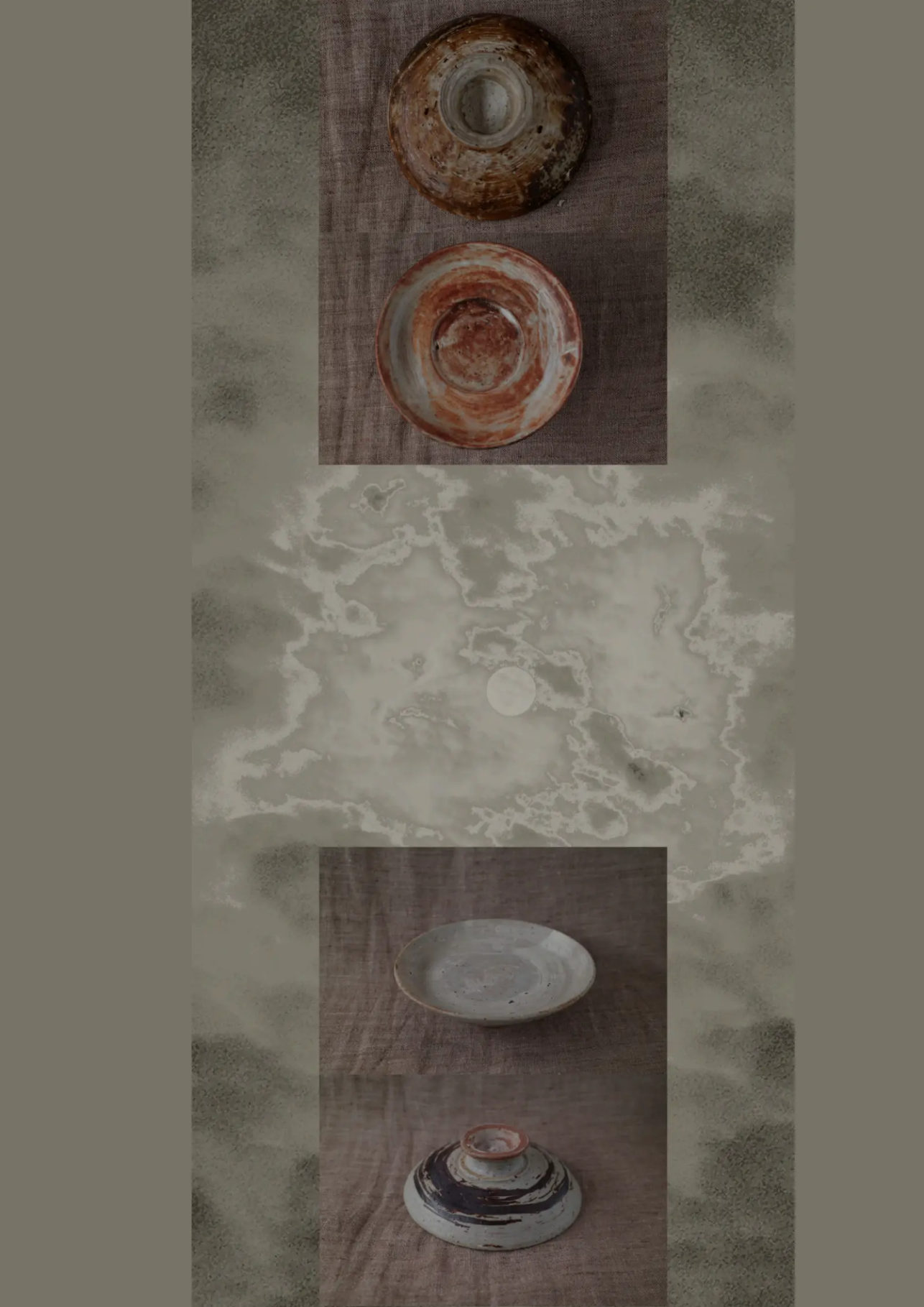
This chapter brings together works including Ember Breath, Twine, and Balancing. Rather than pursuing ideals of perfection, completeness, or refinement, these works embrace traces of burning, residue, distortion, contraction, roughness, and instability. They draw attention toward what remains after transformation has taken place.

In Zhang's work, the aftermath of fire is never understood as an ending. Instead, it signals the beginning of another state of existence. An ember is not the absence of fire, but the form through which fire continues to endure.

The works in this chapter reflect upon resilience, endurance, and the subtle forms of strength that emerge through change. They consider how life persists after disruption, how traces of experience remain within material, and how transformation often occurs not through dramatic events, but through gradual processes of adaptation and survival.

At its core, this chapter explores the warmth that remains after adversity and the capacity of both material and human experience to continue beyond moments of fracture and uncertainty.
Embers and Life 01
Ember Breath
Embers and Life 02
Balancing
Embers and Life 03
Twine
Embers and Life 04
Unform
Embers and Life 05
Obriting Bowl
Chapter Four

Unform and Becoming

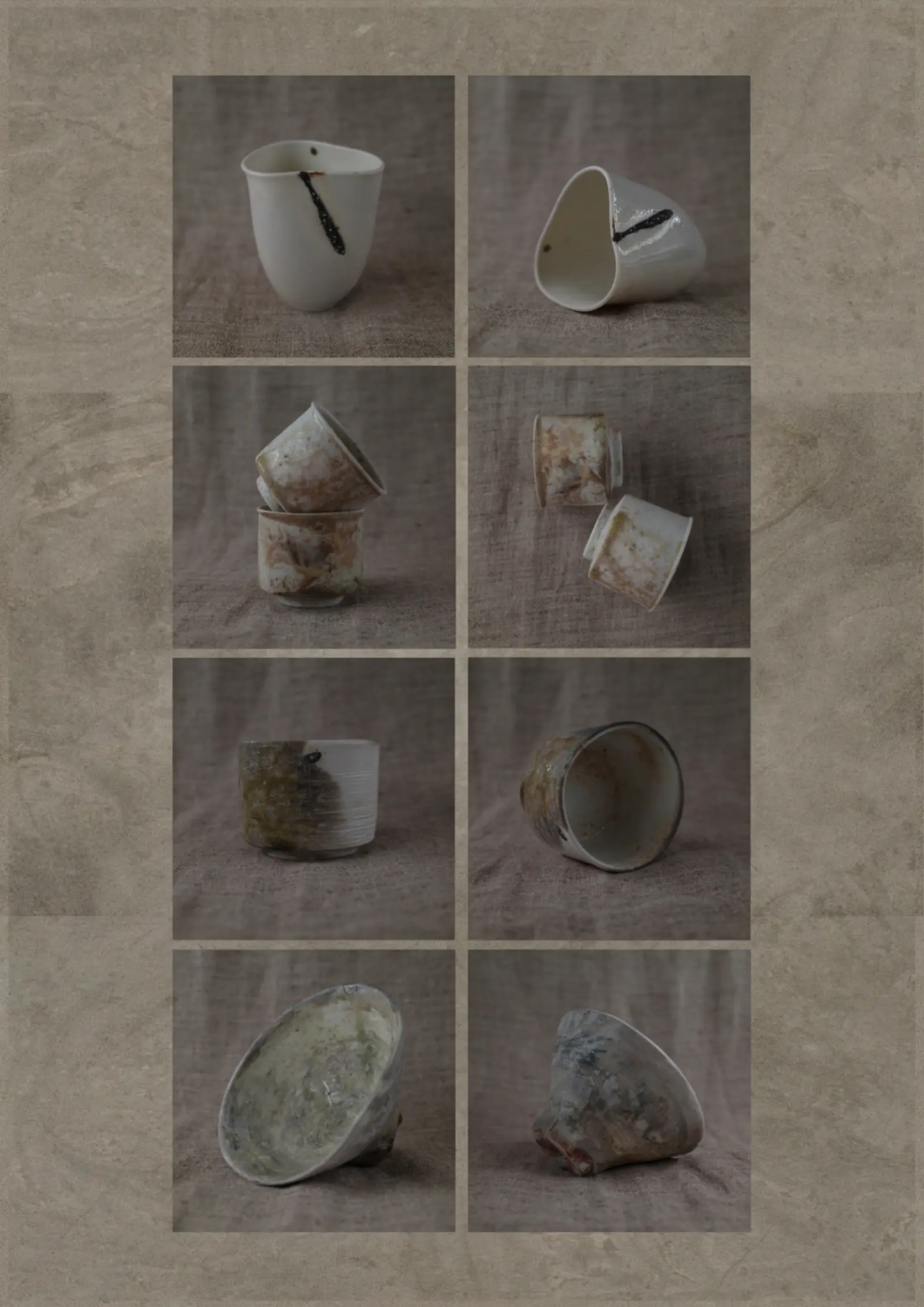
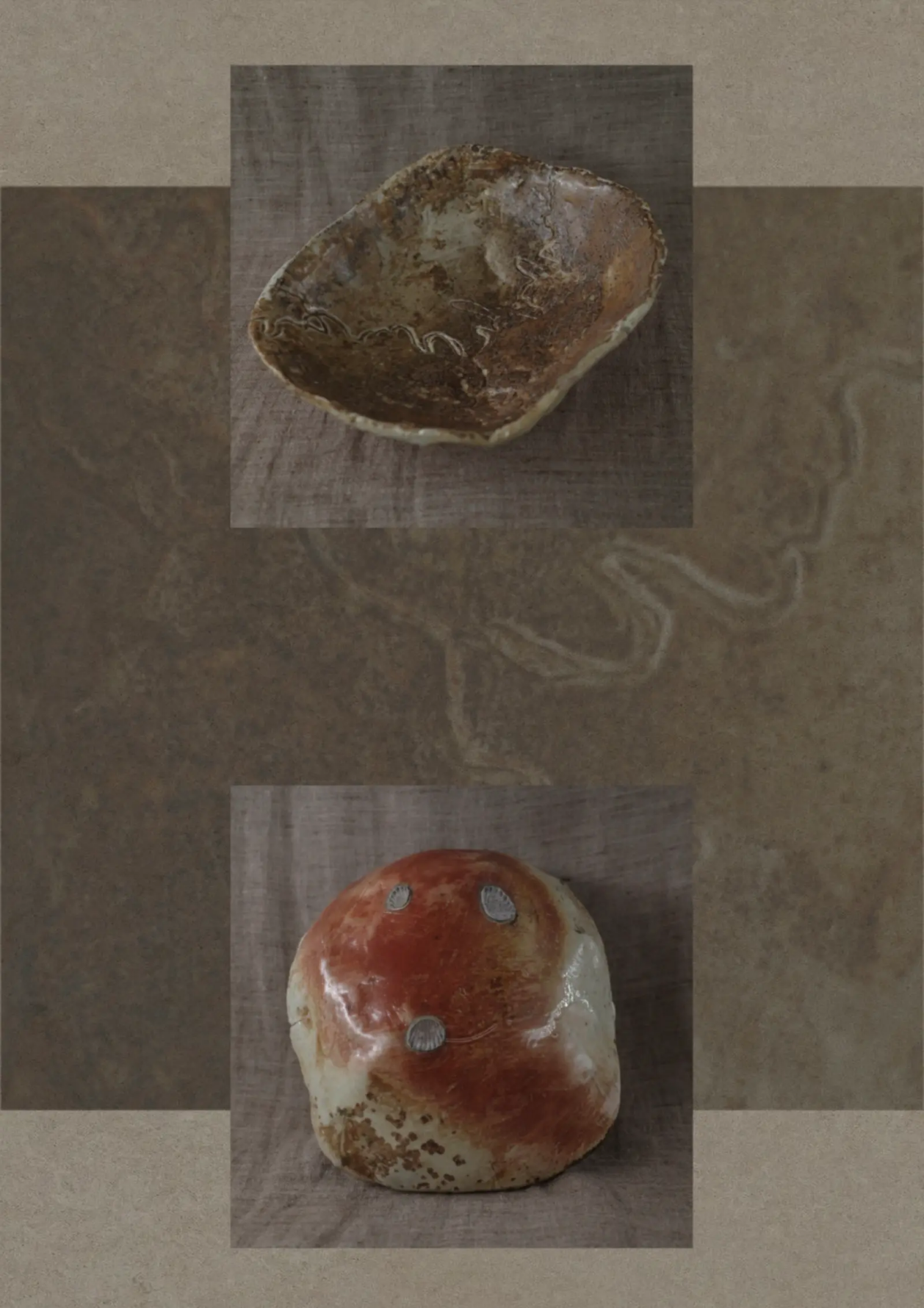
This chapter centres on works including Unform, The Three Realms, and Acoustic, presenting Huiyuan Zhang's increasingly sculptural and conceptually driven explorations.

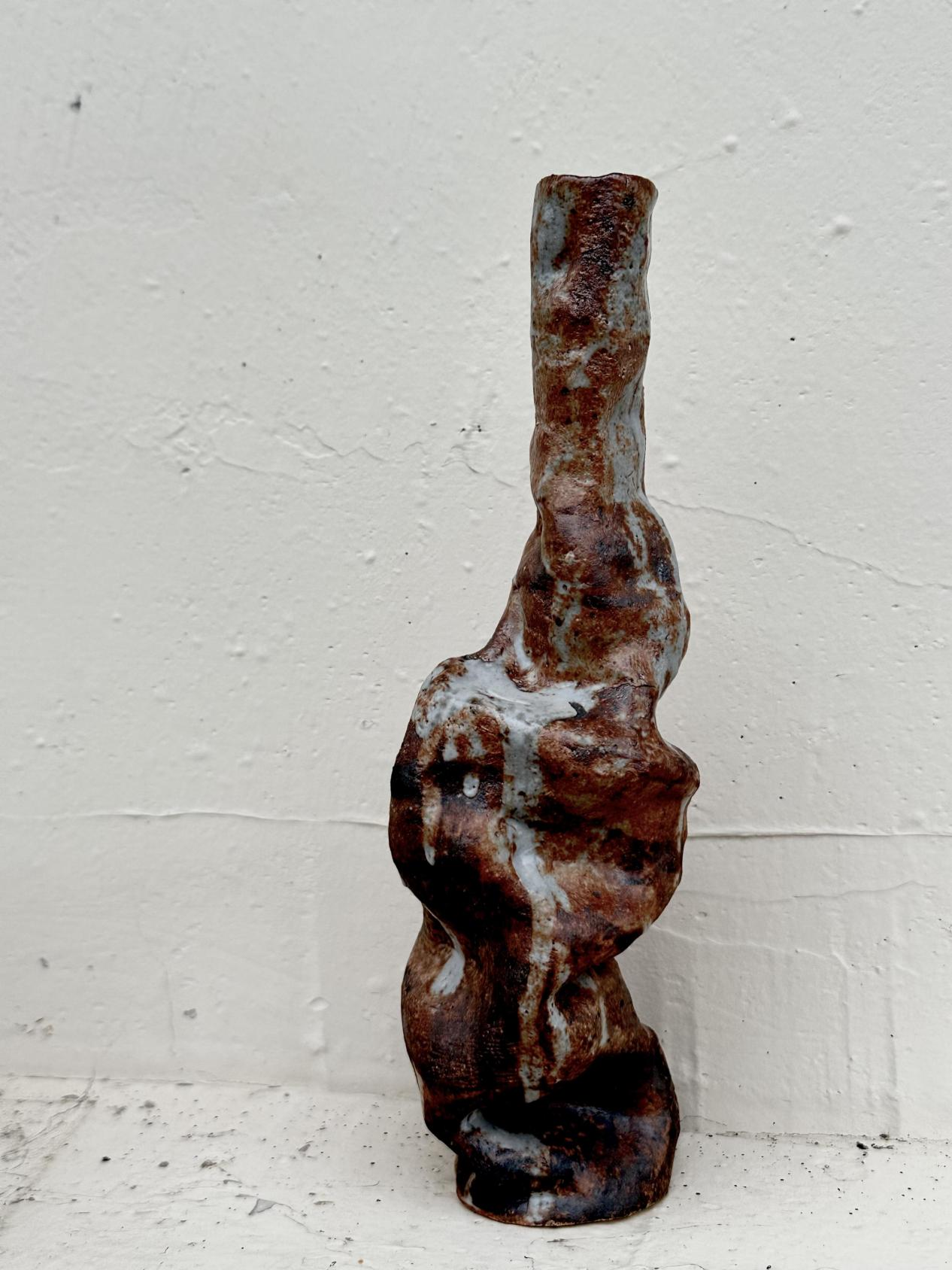
Moving beyond the conventions of the vessel, these works adopt forms that are more open, unstable, and resistant to clear definition. They exist somewhere between body and landscape, ritual object and living organism, material presence and abstraction.

The notion of Unform does not imply the absence of form. Rather, it suggests a refusal to be confined within any single form. These works remain in a state of transition, resisting fixed identities and stable categories.

In this chapter, becoming is understood not as a movement towards completion, but as a condition of continual transformation. Form is never fully settled. Meaning remains open. Each work exists as part of an ongoing process rather than a finished conclusion.

This is the central proposition of The Shape of Becoming. What matters is not the achievement of a final form, but the capacity to remain open to change, uncertainty, and the possibilities that emerge in between.
Unform and Becoming 01
Unform
Unform and Becoming 02
The Three Realms
Unform and Becoming 03
Acoustic
Unform and Becoming 04
Becoming — Form Study

Huiyuan Zhang

Huiyuan Zhang is a Chinese ceramic artist based in London whose practice explores the relationship between nature, time, material transformation, and human experience through the medium of ceramics.

Beginning with the language of the vessel, Zhang works at the intersection of traditional ceramic processes and contemporary artistic inquiry. His practice is informed by an ongoing interest in the connections between the physical world and inner perception, considering ceramics not merely as objects, but as sites where material, memory, and experience converge.

Central to Zhang's work is the idea of ceramics as a finite and self-contained system. Within this system, clay undergoes a cycle of formation, firing, transformation, and return. This understanding of continuity, interconnectedness, and return forms an important foundation of his artistic thinking.

His practice incorporates natural ash glazes derived from materials such as pine ash and straw ash, alongside both wood-firing and gas-firing techniques. Through these processes, fire, ash, air circulation, and time become active participants in the making of the work. Rather than seeking complete control over the final outcome, Zhang embraces the unpredictable interactions between material and process, allowing each piece to develop its own unique surface and character.

Works such as Ethereal Cloud and Bodhi reflect his ongoing exploration of balance, transformation, and the relationship between the inner and outer worlds. For Zhang, ceramics are not static objects but material traces of lived experience. Through clay and fire, he seeks to create works that encourage contemplation, deepen sensory awareness, and invite reflection on the relationship between self, nature, and the wider world.

Since relocating to London in 2023, Zhang has continued to develop his practice within the context of contemporary British ceramics and contemporary art, exploring new possibilities for ceramics as a medium of cultural, material, and philosophical inquiry.

Selected Photographs

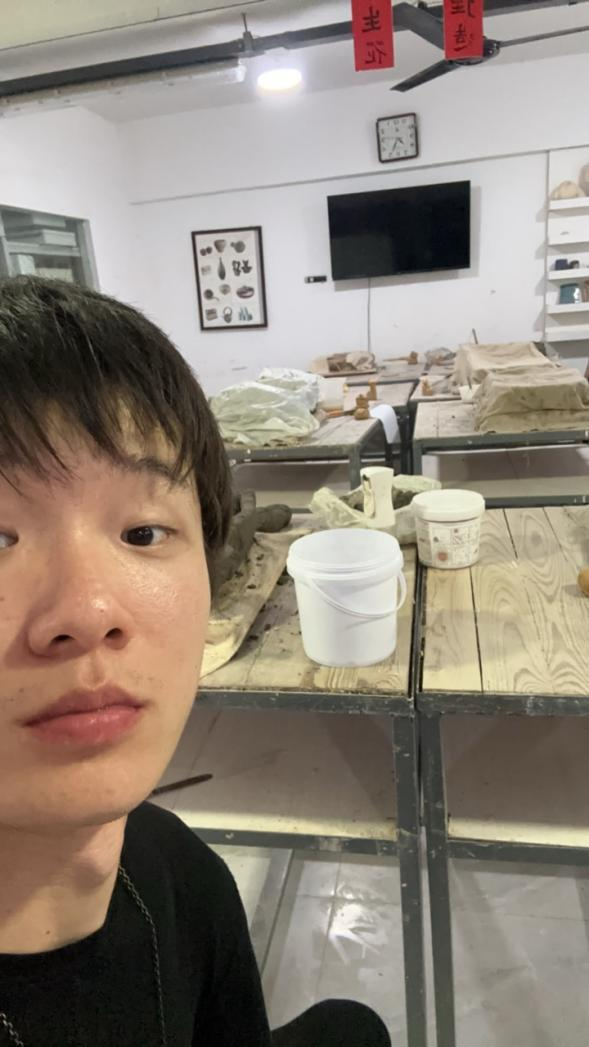
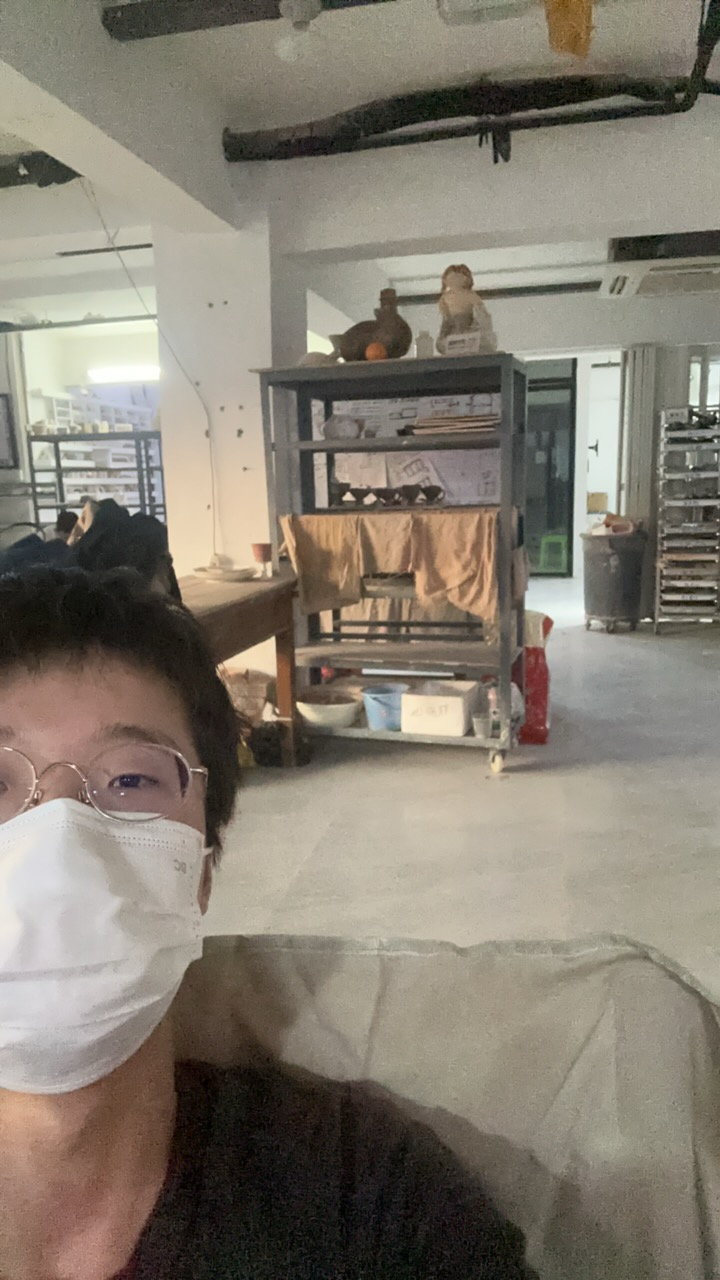
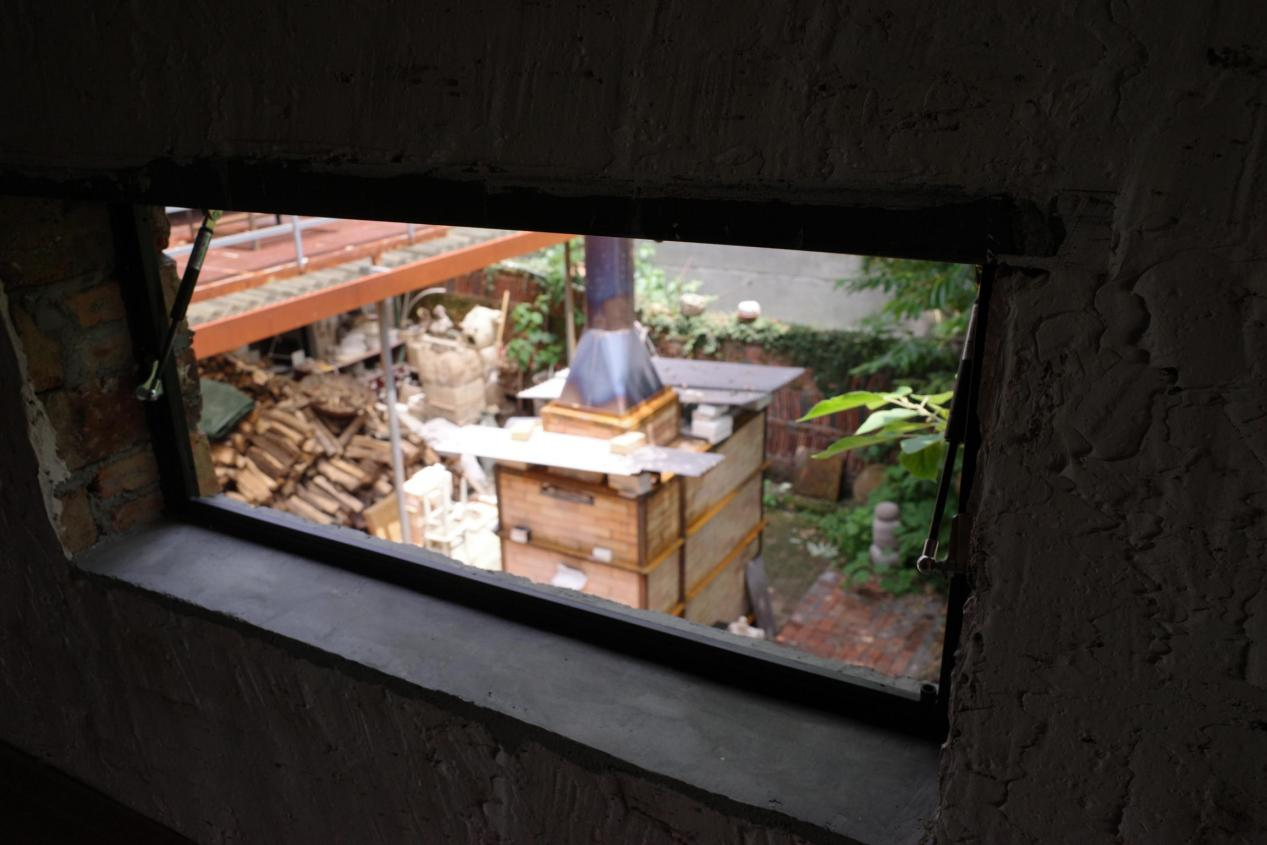
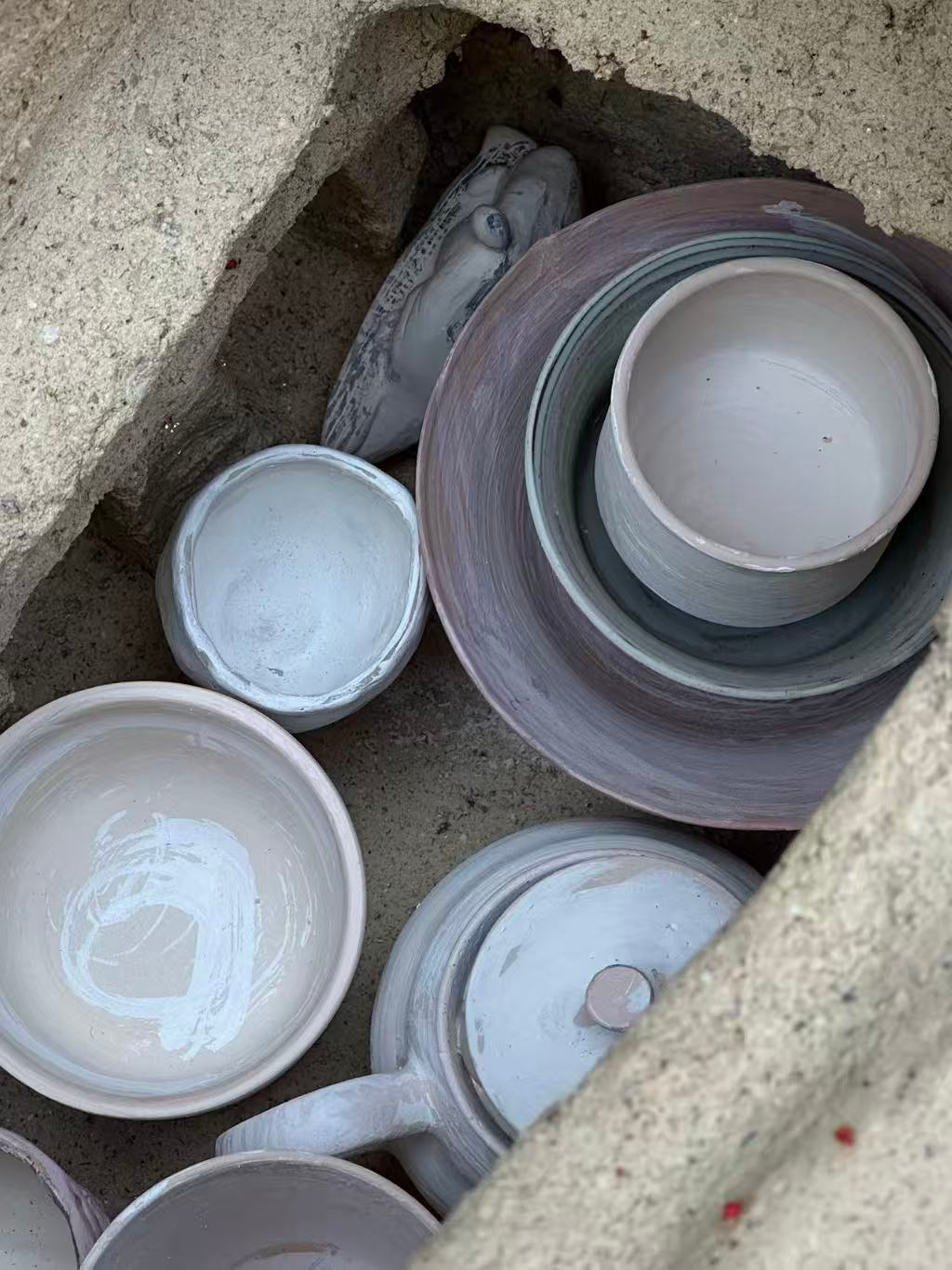
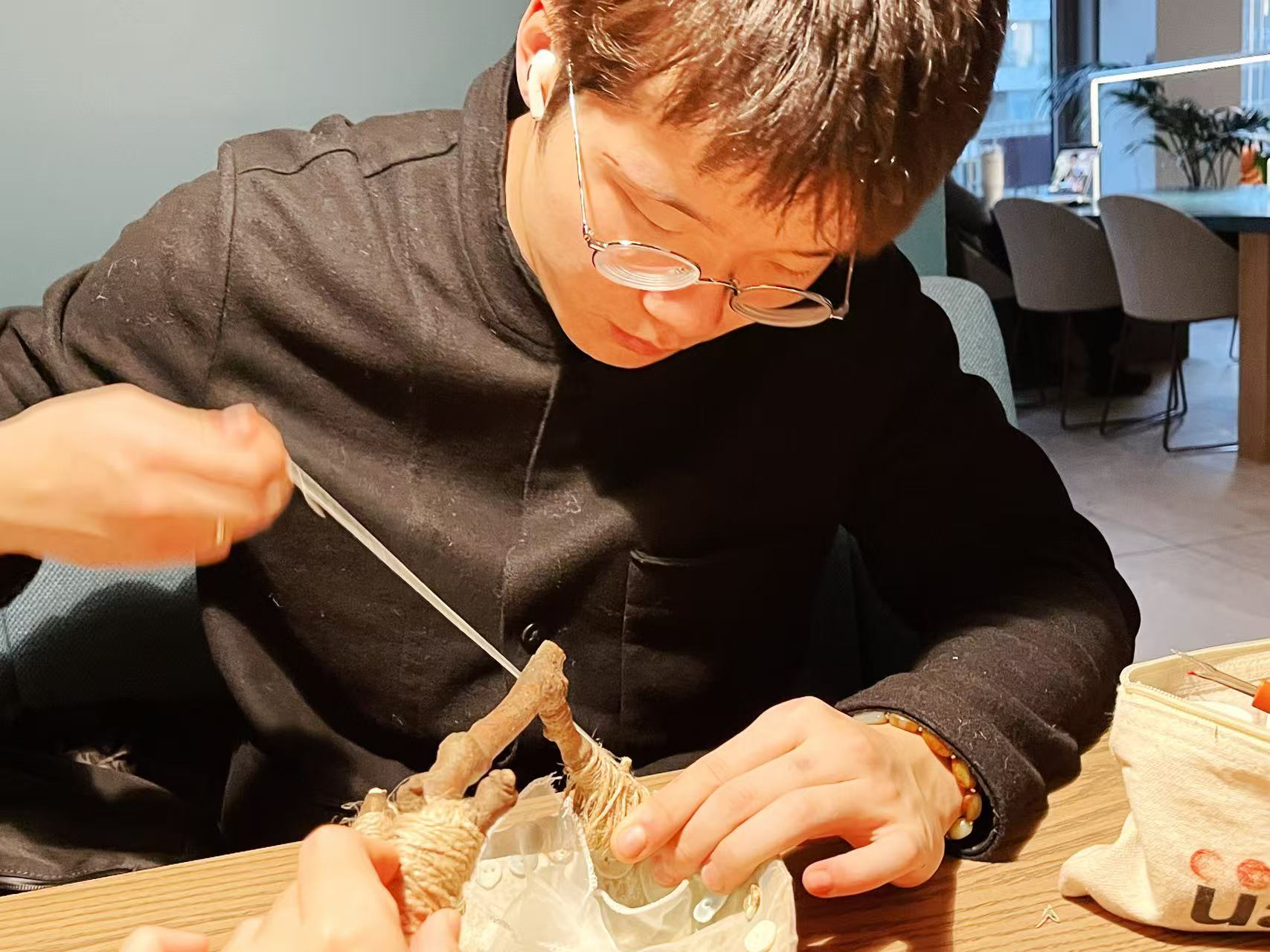
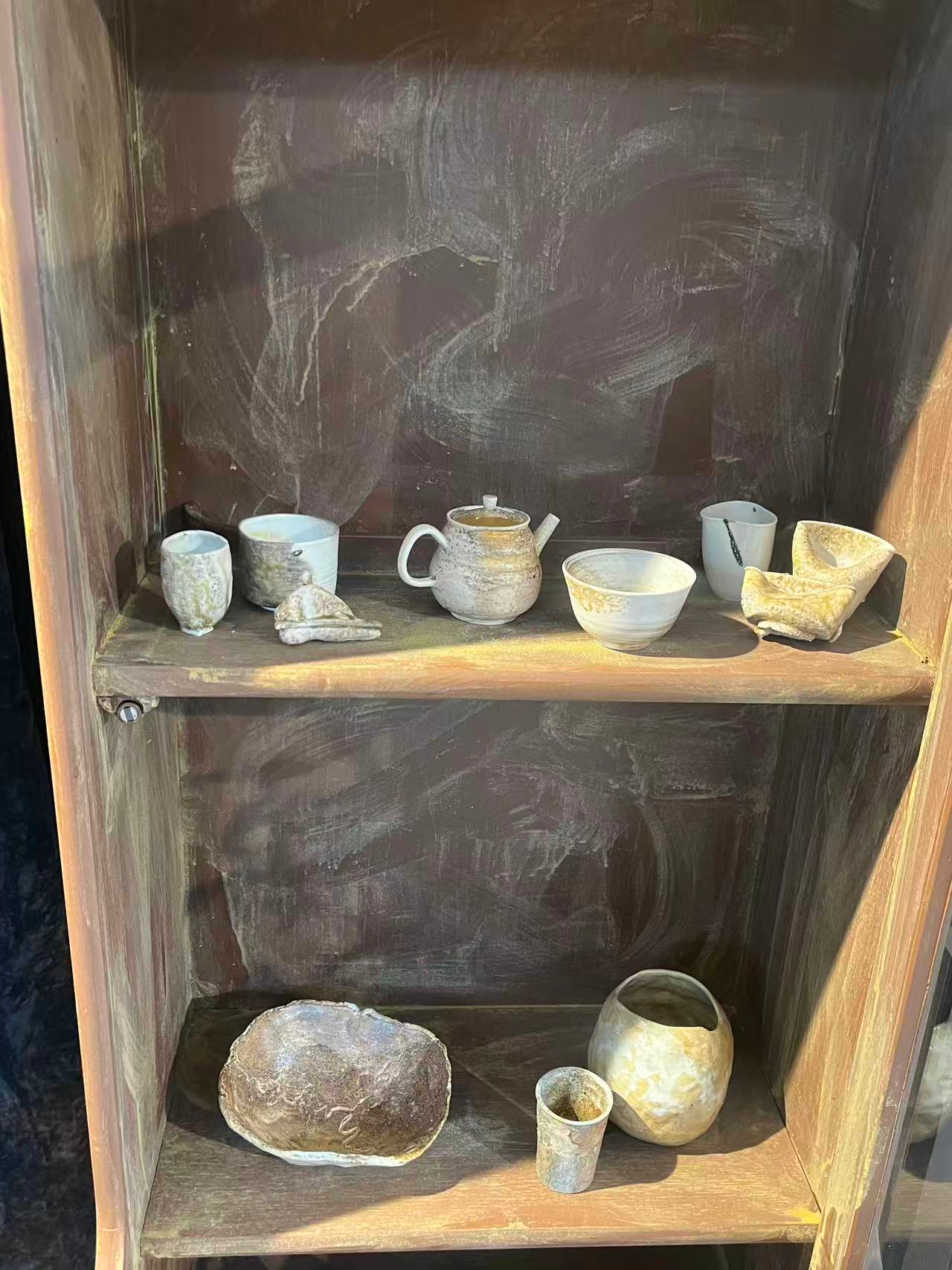
A glimpse into Huiyuan Zhang's ceramic studio in London, capturing the processes, environment, and landscapes that inform his practice.

Huiyuan Zhang in His Ceramic Studio, London
Huiyuan Zhang in His Ceramic Studio, London, UK
Huiyuan Zhang in Studio
Huiyuan Zhang in His Ceramic Studio, London, UK
View from the Ceramic Studio
View from the Ceramic Studio, London, UK
Ceramic Making Process
Huiyuan Zhang Ceramic Artwork
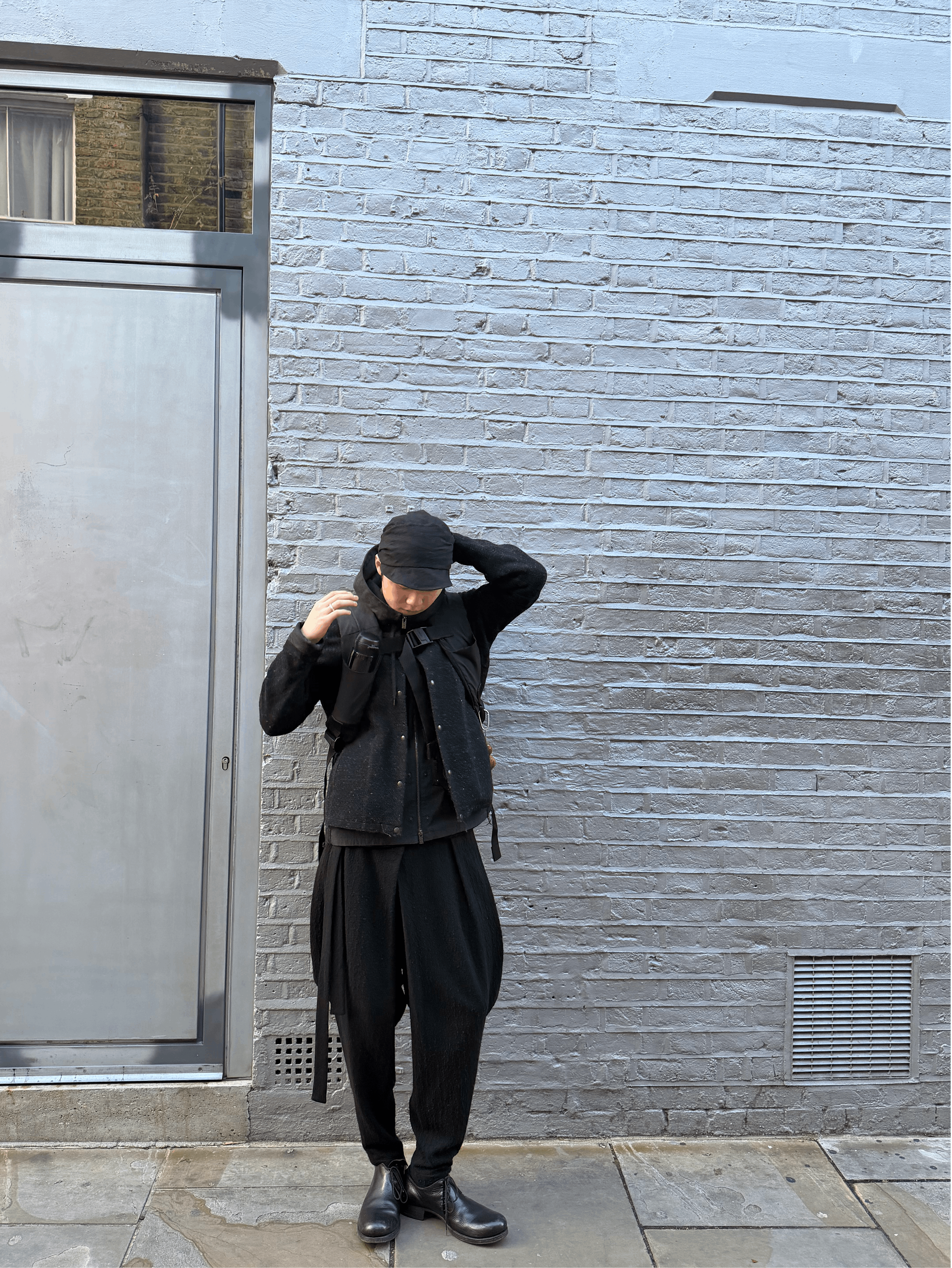
Photographed in East London
Photographed in East London, UK
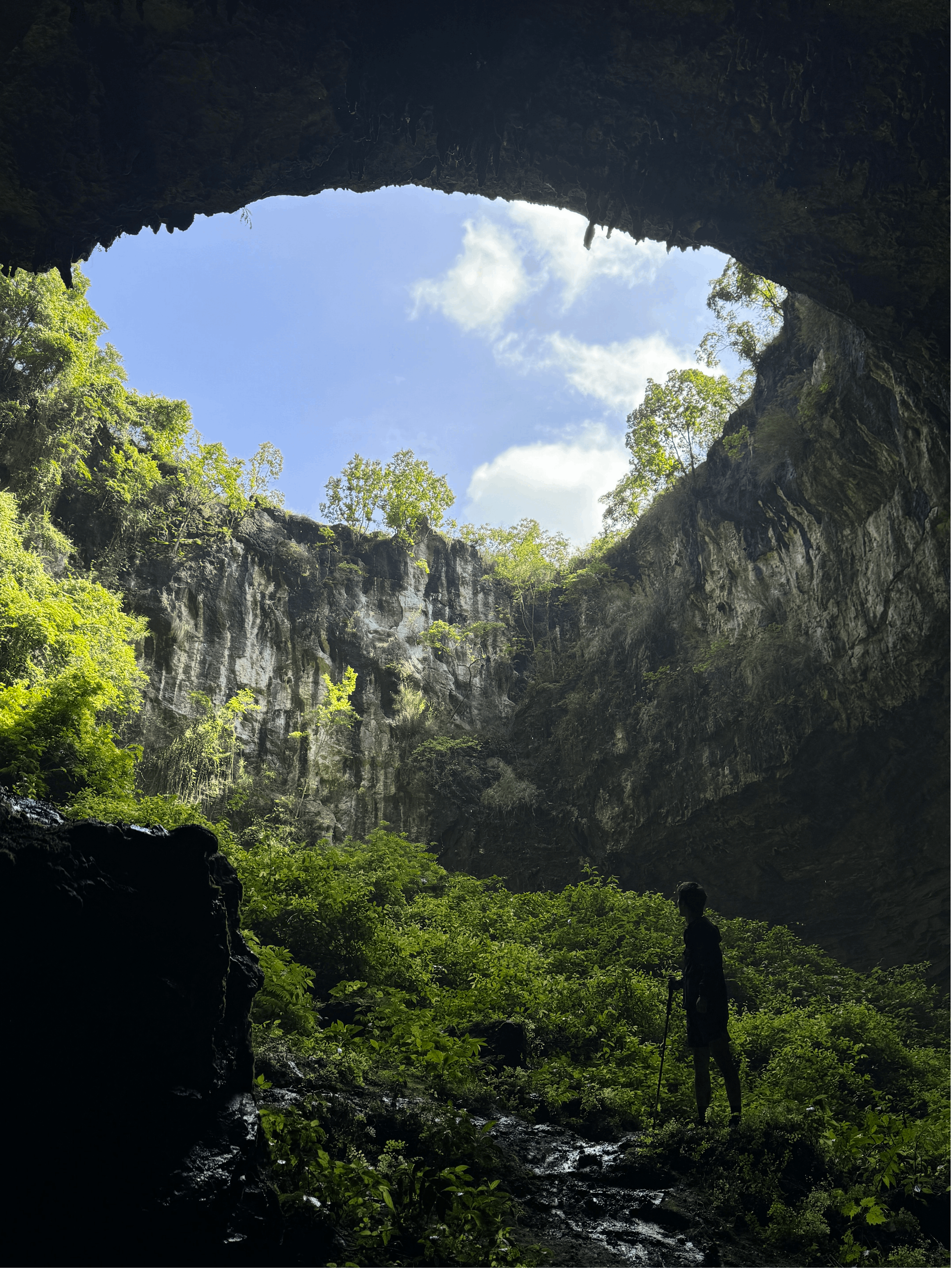
Huiyuan Zhang Hiking in the UK
  • What Remains
    East London Art Space, London, United Kingdom
    December 2024 – February 2025
  • The Phantom's Voice in the Vortex
    BAI Work / Yongxing Warehouse, Shanghai, China
    10 May 2024 – 10 June 2024
  • Out of this World
    East Bund, Shanghai, China
    7 September 2024 – 30 September 2024
  • Acts of Making
    Bethnal Green, London, United Kingdom
    November 2023 – February 2024
  • Beneath the Surface
    London, United Kingdom
    May 2023 – July 2023
  • PARADISE·Art Festival 2.0
    Shanghai Fangyin Cultural & Creative, Shanghai, China
    20 March 2023 – 23 March 2023
  • A Dream of Tomorrow
    Shanghai, China
    19 August 2022 – 11 September 2022
  • The 9th Edition of West Bund Art & Design
    West Bund, Shanghai, China
    5 November 2022 – 10 November 2022
  • T-ART CON
    South Bund Old Wharf, Shanghai, China
    19 November 2022 – 27 November 2022
  • First In – First Out
    L'Art702 / FIFO Gallery, Shanghai, China
    25 May 2020 – 1 June 2020

The Shape of Becoming is not the conclusion of Huiyuan Zhang's artistic journey. Rather, it marks an important beginning in the development of his practice within the United Kingdom.

Since relocating to London in 2023, Zhang has gradually become part of the British and European contemporary art landscape. Looking ahead, he intends to continue developing his practice in the UK, deepening the relationship between wood-fired ceramics, natural ash glazes, sculptural vessels, and contemporary installation. At the same time, he seeks to expand the possibilities of ceramics as a medium for contemporary artistic inquiry.

For Zhang, Britain represents more than a place to live and work. It is a context in which long-term artistic relationships, exhibition opportunities, research, and public engagement can develop. While The Shape of Becoming serves as a significant online presentation of his work, his next ambition is to extend this dialogue into physical exhibition spaces and direct encounters with audiences.

The Shape of Becoming documents a path already travelled. What remains most exciting are the forms that have yet to emerge.

The Shape of Becoming is not an exhibition about completion. On the contrary, it presents an artist whose work remains in a state of becoming.

Looking back at Huiyuan Zhang's recent practice, one can trace a continuous process of transformation. From Unform 0 and its engagement with individual experience, to Ethereal Cloud and its exploration of material agency and natural transformation, and onward to The Three Realms, Ember Breath, and Bodhi, which investigate consciousness, impermanence, and spiritual existence, Zhang's work has never remained fixed within a single language or framework.

This ongoing evolution is perhaps more significant than any individual artwork.

For Zhang, ceramics have never been a medium that can be fully defined. They exist simultaneously as vessels and sculptures, as material experiments and spiritual inquiries, as continuations of tradition and propositions for new possibilities.

What The Shape of Becoming records is precisely this process of change. As Huiyuan Zhang's first online solo exhibition in the United Kingdom, the exhibition not only reflects upon the development of his work over recent years, but also marks an important beginning within a new cultural and artistic context.

Since relocating to London in 2023, Zhang has gradually entered the British and European art scene. From group exhibitions to solo projects, from a Chinese artistic context to a cross-cultural environment, and from vessel-based practice to broader contemporary artistic expression, he continues to redefine his position as an artist.

This journey is far from straightforward. It involves confronting difficult questions. How can one honour tradition without simply repeating it? How can natural transformation remain open while still supporting a distinctive artistic voice? How can ceramics engage not only with nature and harmony, but also with the realities of contemporary life?

These questions may not find definitive answers within this exhibition. Yet it is precisely for this reason that the exhibition matters.

It is not a conclusion. It is a beginning. Each work presented here carries traces of its own becoming: the marks left by flame, the deposits of ash, the movement of glaze, subtle asymmetries of form, and the evidence of time embedded within material. Together, these traces remind us that what matters most is not where we ultimately arrive, but how we continue to become.

For Zhang, becoming is both a method of making and a way of understanding the world. For viewers, it is an invitation. An invitation to slow down, to attend to material, time, and nature, and to reconsider the relationship between self and world. It is also an invitation to recognise the value of what remains unfinished, uncertain, and still in motion.

The Shape of Becoming does not present a body of completed works, but an ongoing journey. The unfinished forms, the questions that remain open, and the possibilities yet to emerge may ultimately be the exhibition's true subject.

The forms are still unfolding.
The questions remain alive.
And the act of becoming continues.

EveryArt is a multidisciplinary arts platform dedicated to making art more accessible and integrating it into everyday life. By bringing together artists, audiences, and creative communities across different media, the platform seeks to reduce the distance between contemporary art and the public.

Huiyuan Zhang's work resonates naturally with EveryArt's vision. His ceramics do not rely on grand narratives or create a sense of distance between artwork and viewer. Instead, they often begin with familiar forms such as bowls, cups, teapots, plates, and vessels, objects deeply connected to everyday experience. Through his practice, however, these forms are transformed into mediators between nature, time, memory, and the spiritual world.

The relationship between EveryArt and Huiyuan Zhang did not begin with The Shape of Becoming. Since A Dream of Tomorrow in 2022, followed by PARADISE·Art Festival 2.0 in 2023 and The Phantom's Voice in the Vortex in 2024, EveryArt has consistently supported and witnessed the development of Zhang's artistic language.

Together, these exhibitions represent significant stages in his practice. A Dream of Tomorrow introduced early reflections on vulnerability, time, and hope. PARADISE·Art Festival 2.0 marked an important shift through the Ethereal Cloud series, in which Zhang moved from personal expression towards questions of material transformation and natural order. The Phantom's Voice in the Vortex further expanded these concerns through works such as The Three Realms, Ember Breath, and Bodhi, engaging with consciousness, spirituality, and the complexities of contemporary existence.

For this reason, The Shape of Becoming should not be understood as an isolated online exhibition. Rather, it represents a significant moment within a long-term dialogue between EveryArt and the artist.

As Huiyuan Zhang's first online solo exhibition in the United Kingdom, the project carries a dual significance. It introduces his work to broader British and international audiences while also establishing an important foundation for the next stage of his artistic development.

This exhibition is both a presentation and an archive. It records a journey from China to Britain, from vessel-making to contemporary artistic inquiry, and from material experimentation to spiritual reflection. At the same time, it reflects EveryArt's ongoing commitment to supporting emerging artists and accompanying them throughout their creative development.

EveryArt